9/8/25: Catching up 4
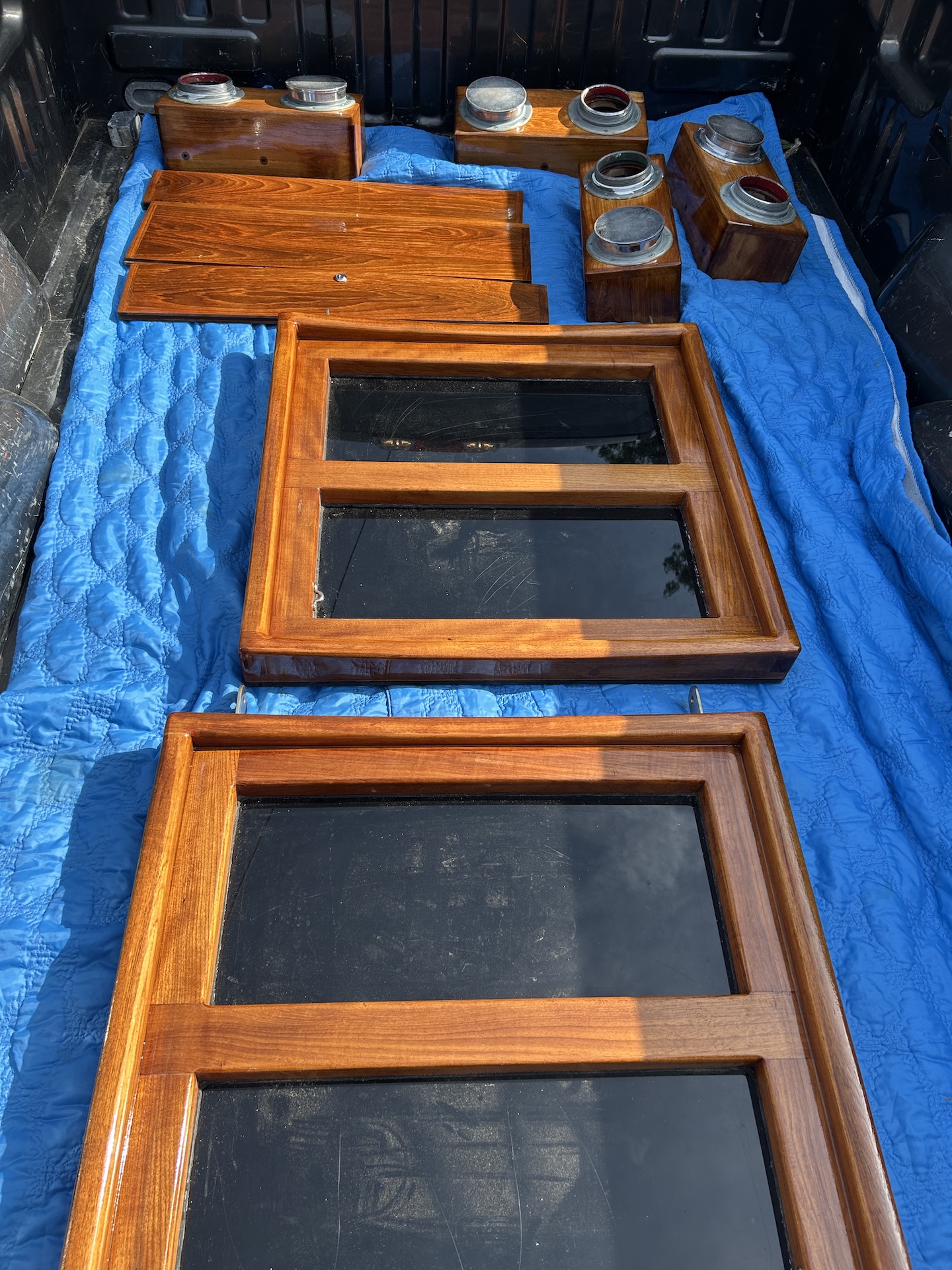
By the end of Summer 2024 I had let the companionway drop boards, dorade boxes, and hatches get to a sorry state. So that winter I took them home for a proper refinishing. Here are some pictures of the refinishing process.
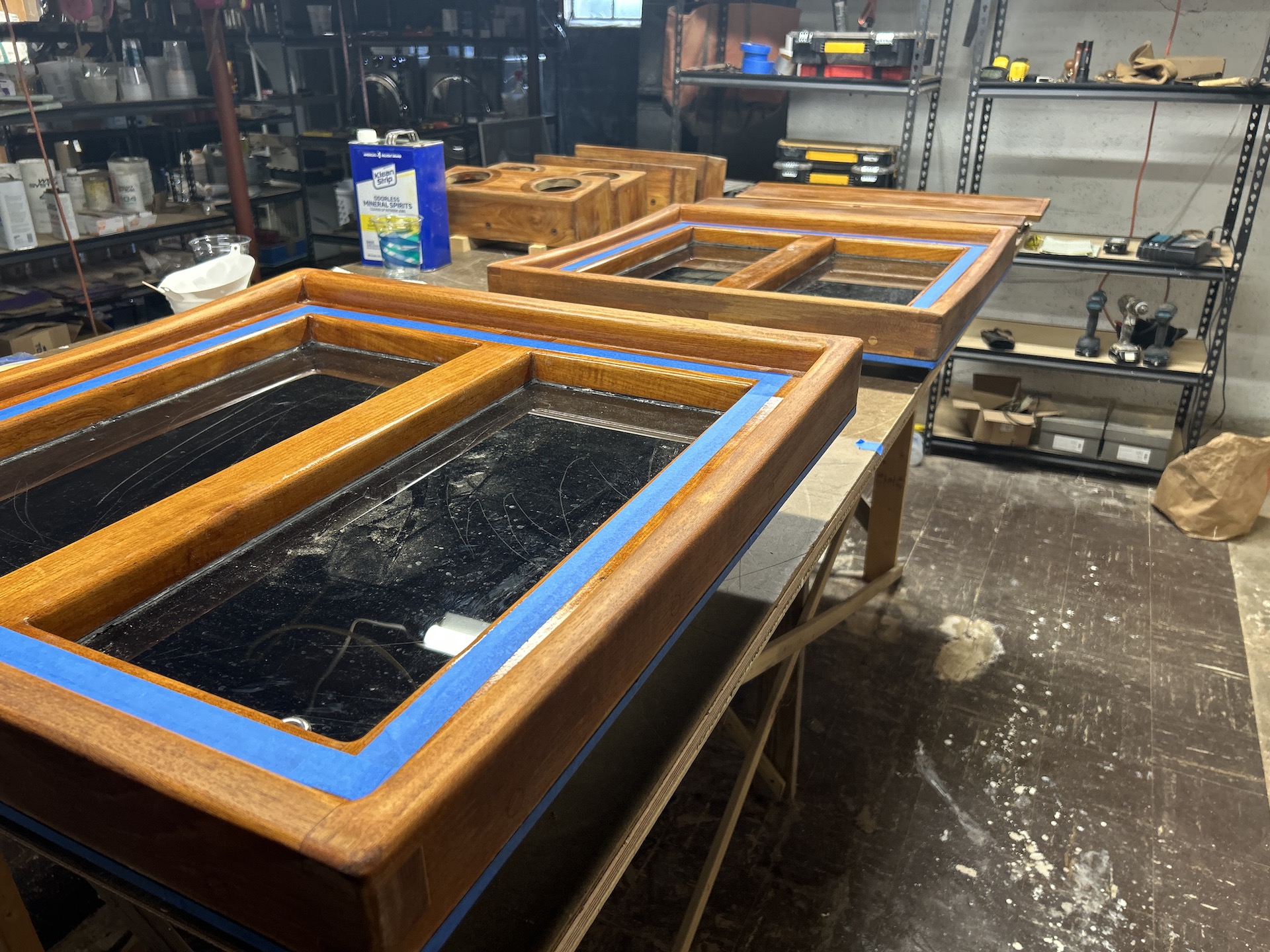
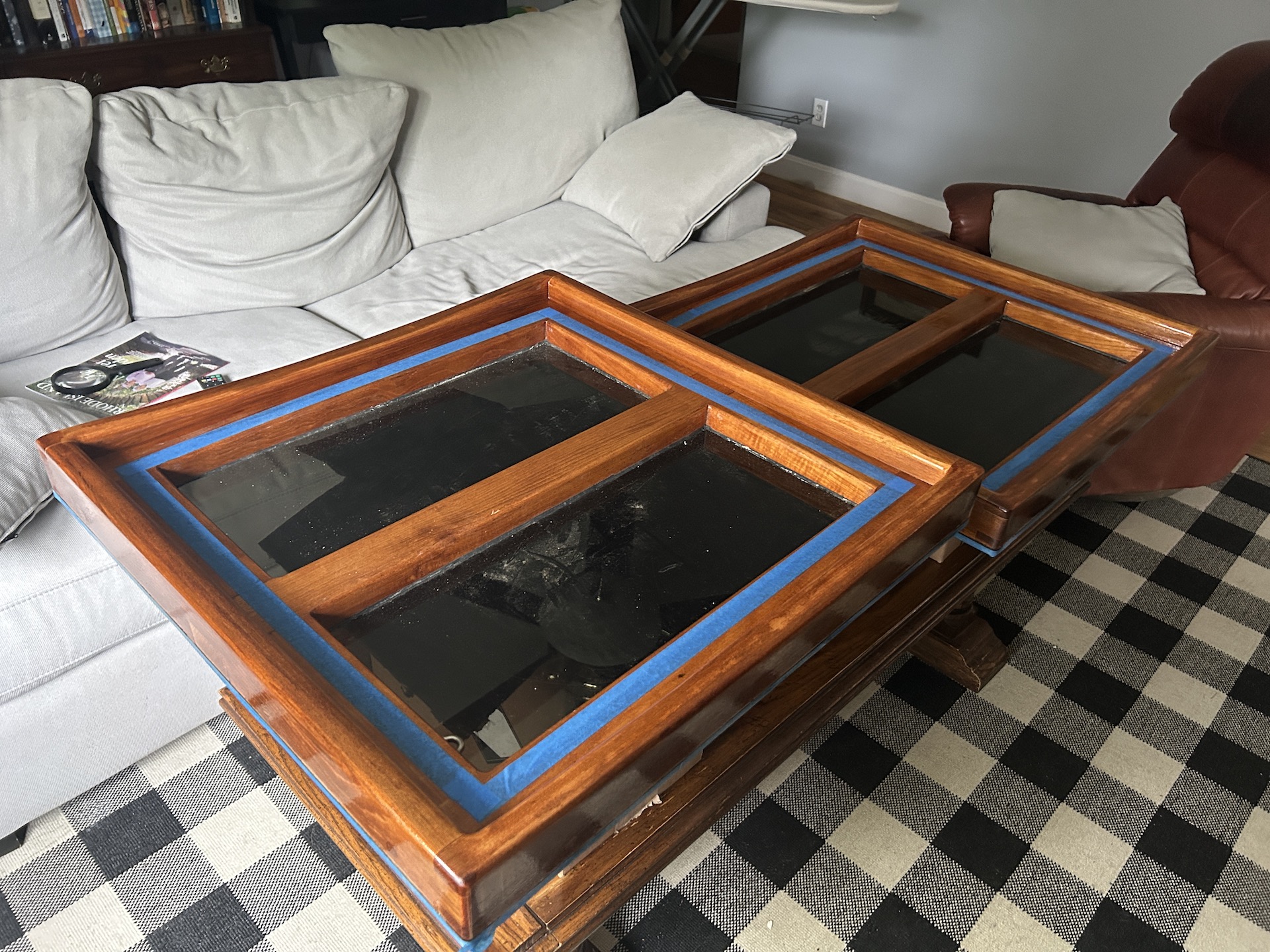
(The box in the picture below is a project for another boat, but it came along for the varnishing ride.)
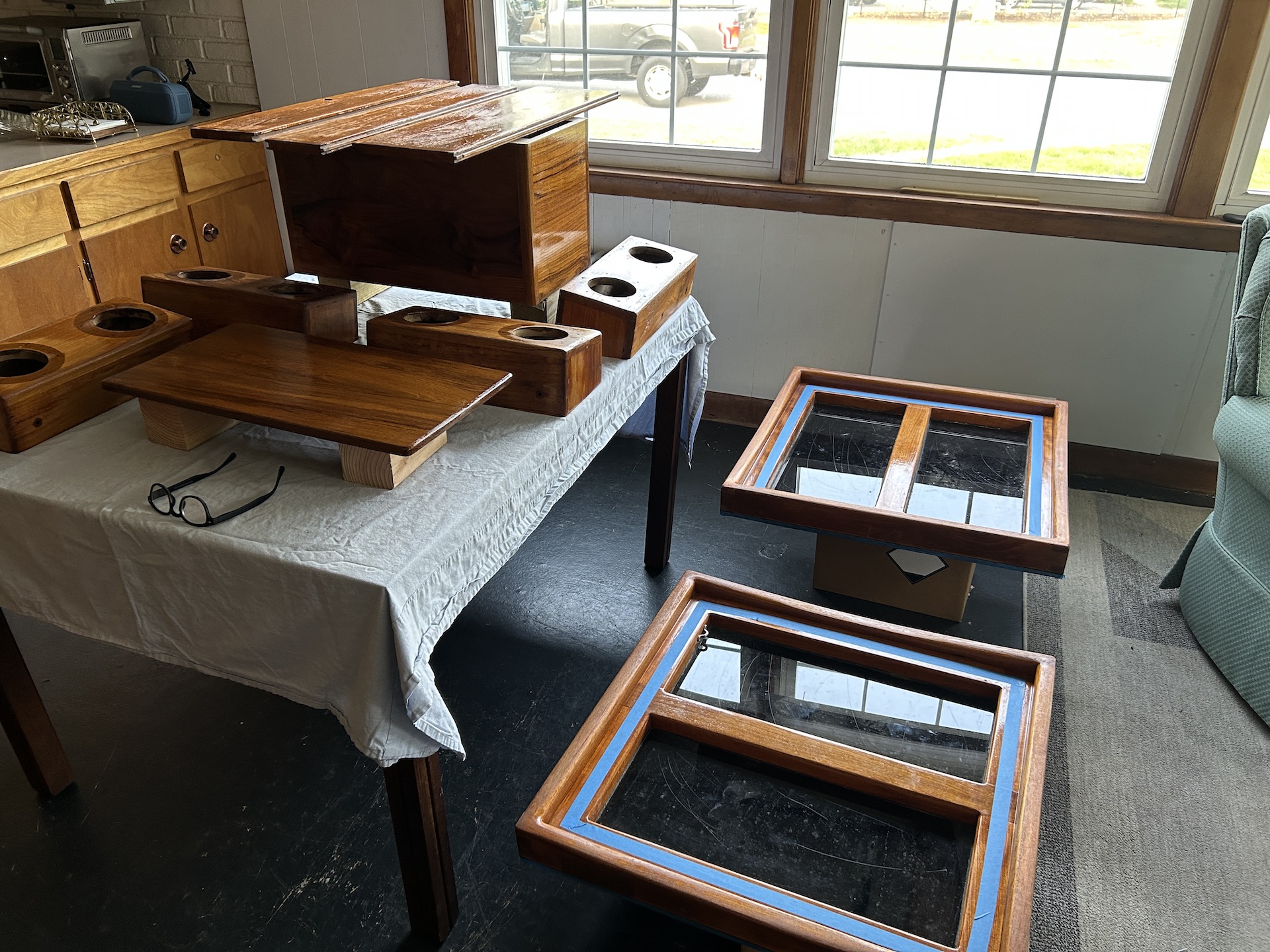
Loaded in the truck to bring back to the boat:
Getting ready for launch began by uncovering the boat…
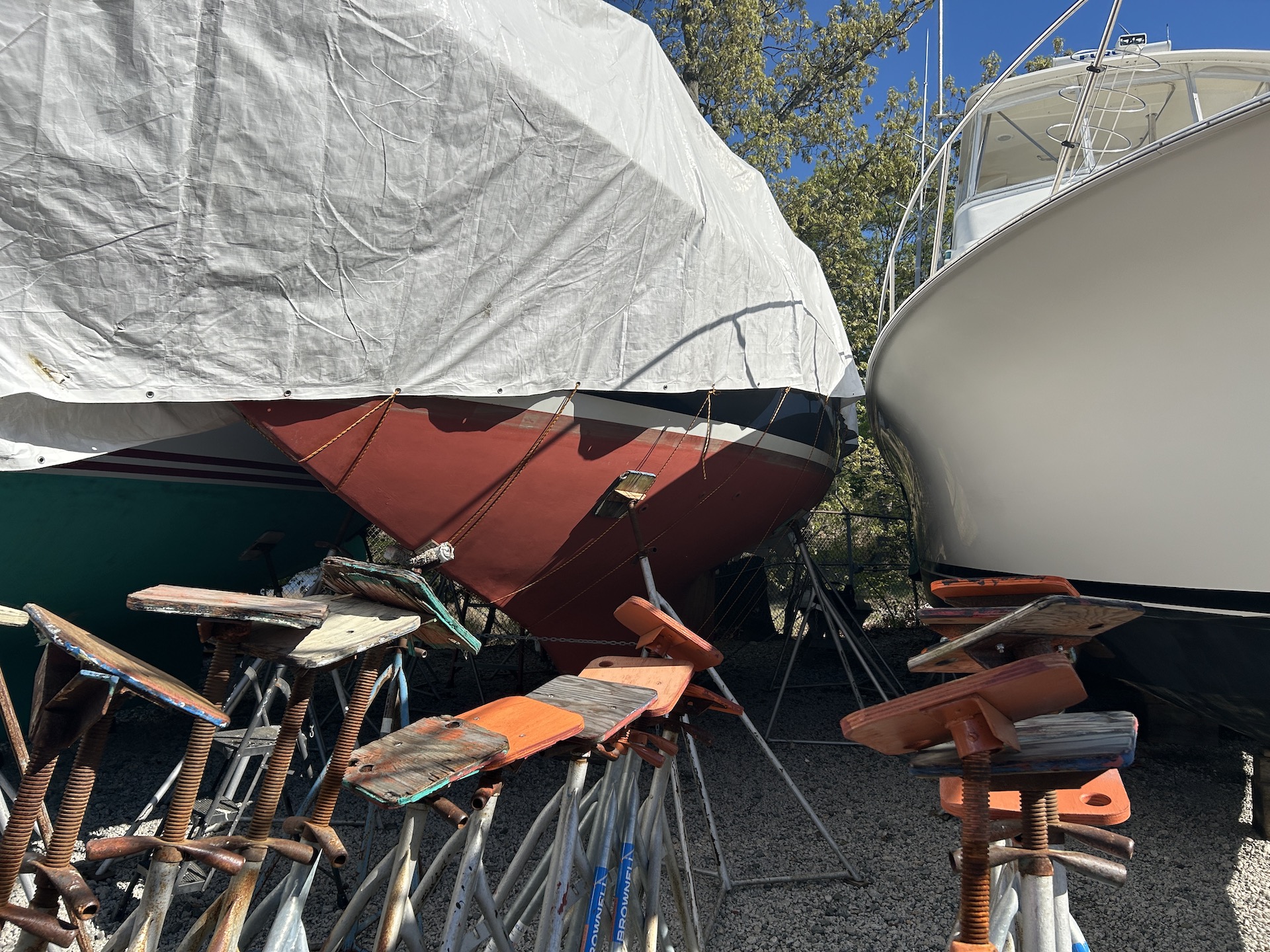
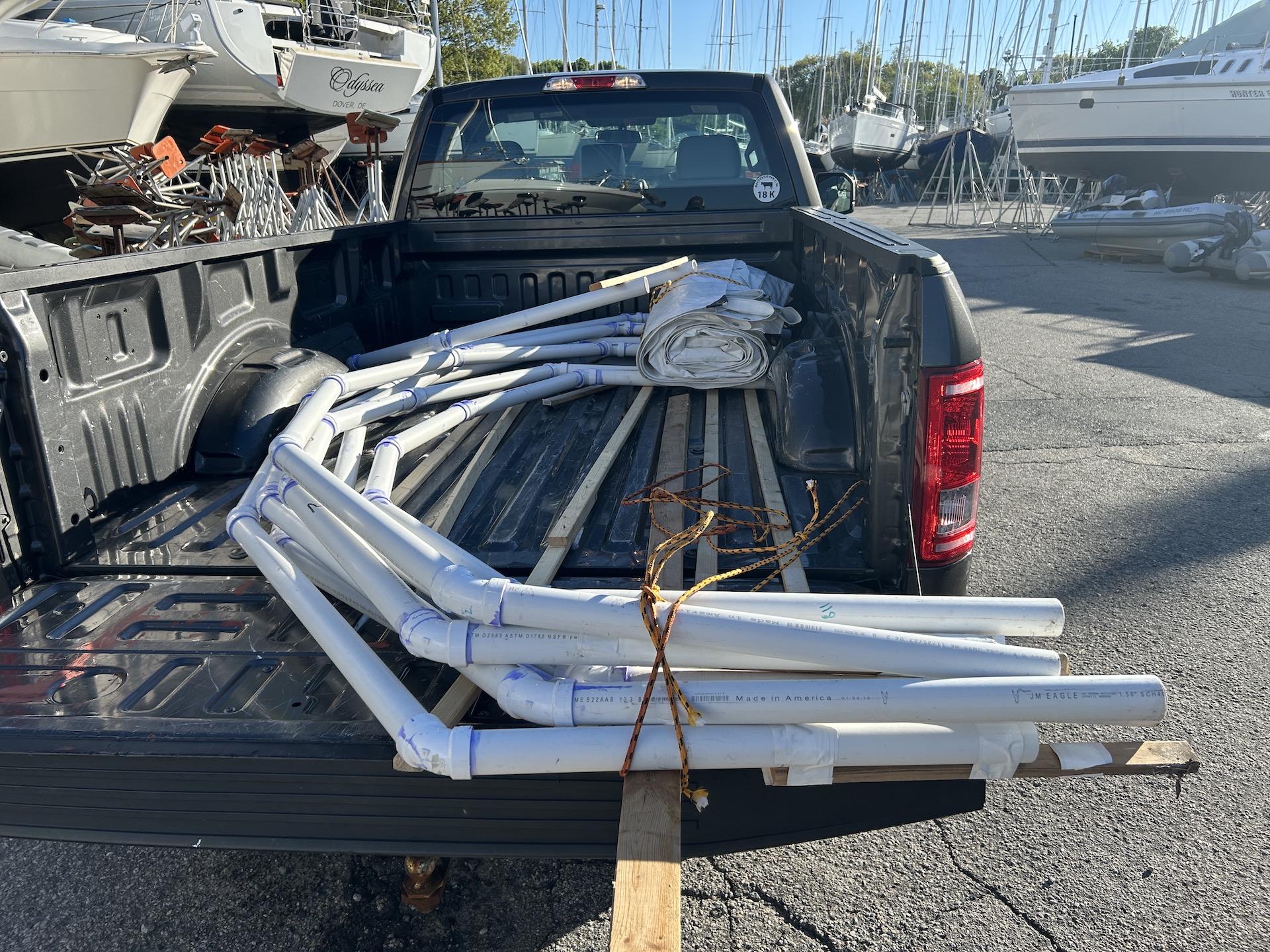
…taking home the frame and tarp…
…painting the bottom…
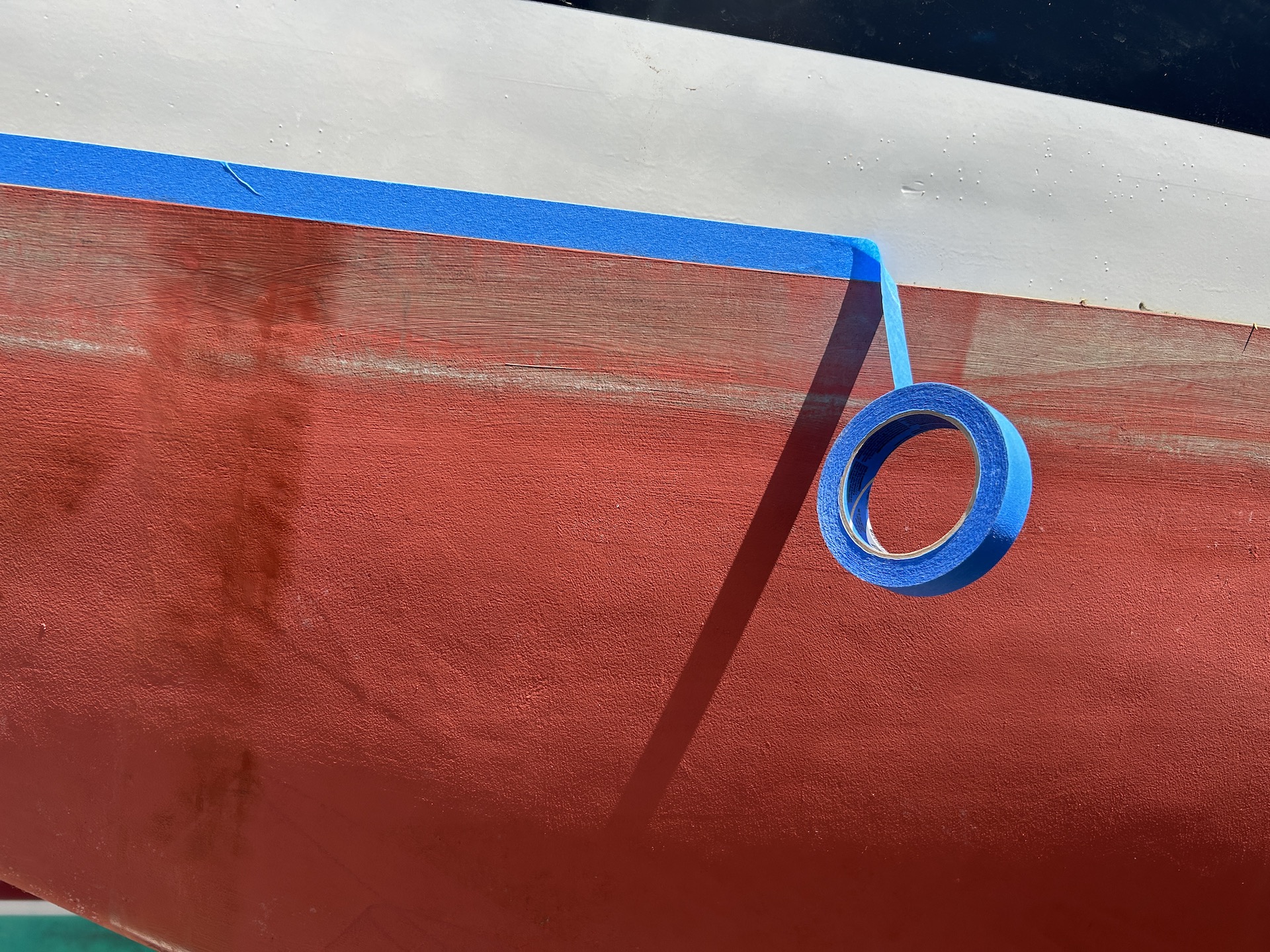
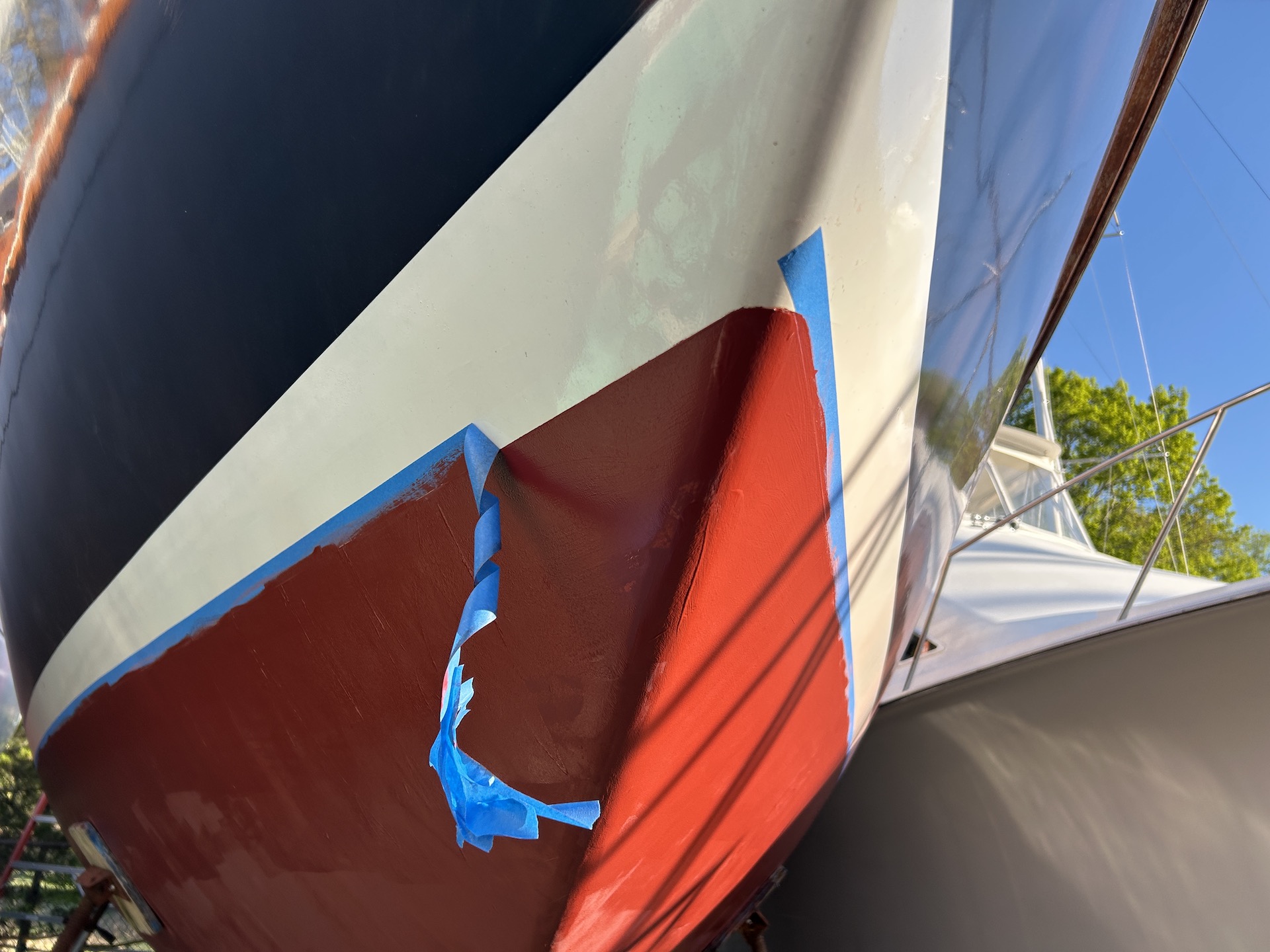
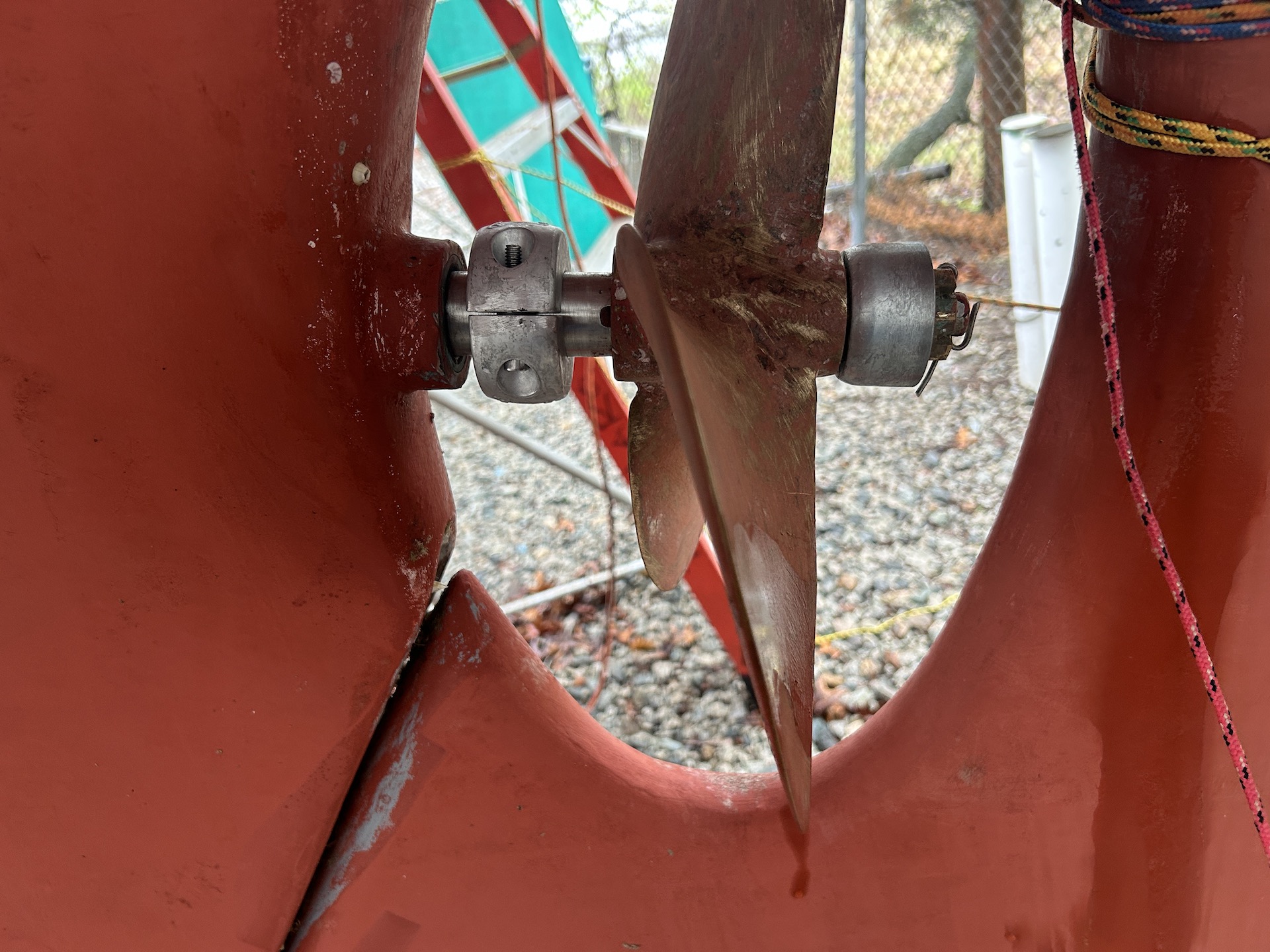
…and new zincs (this photo taken before painting).
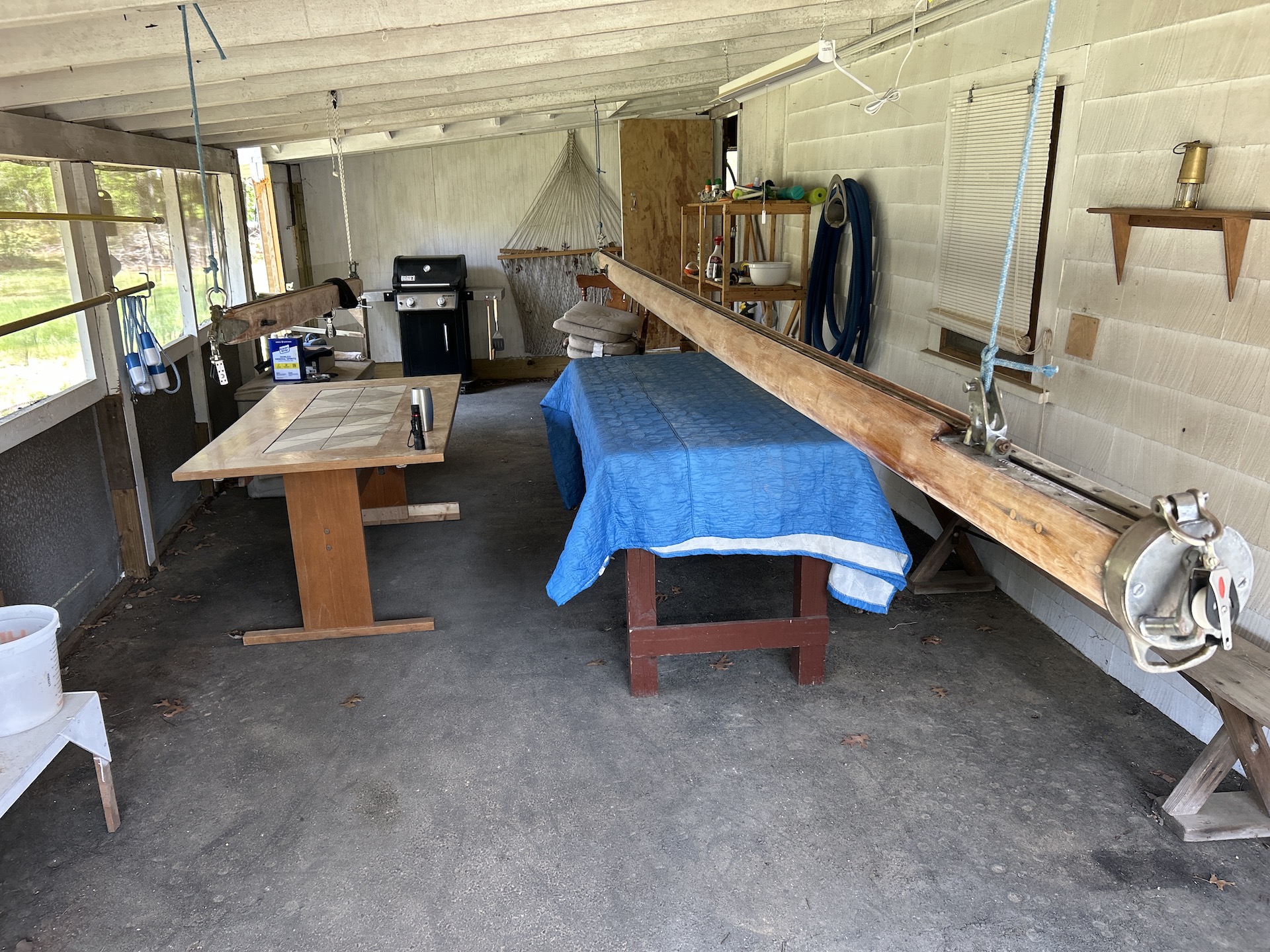
The booms were varnished at home:
The masts were varnished at the marina:
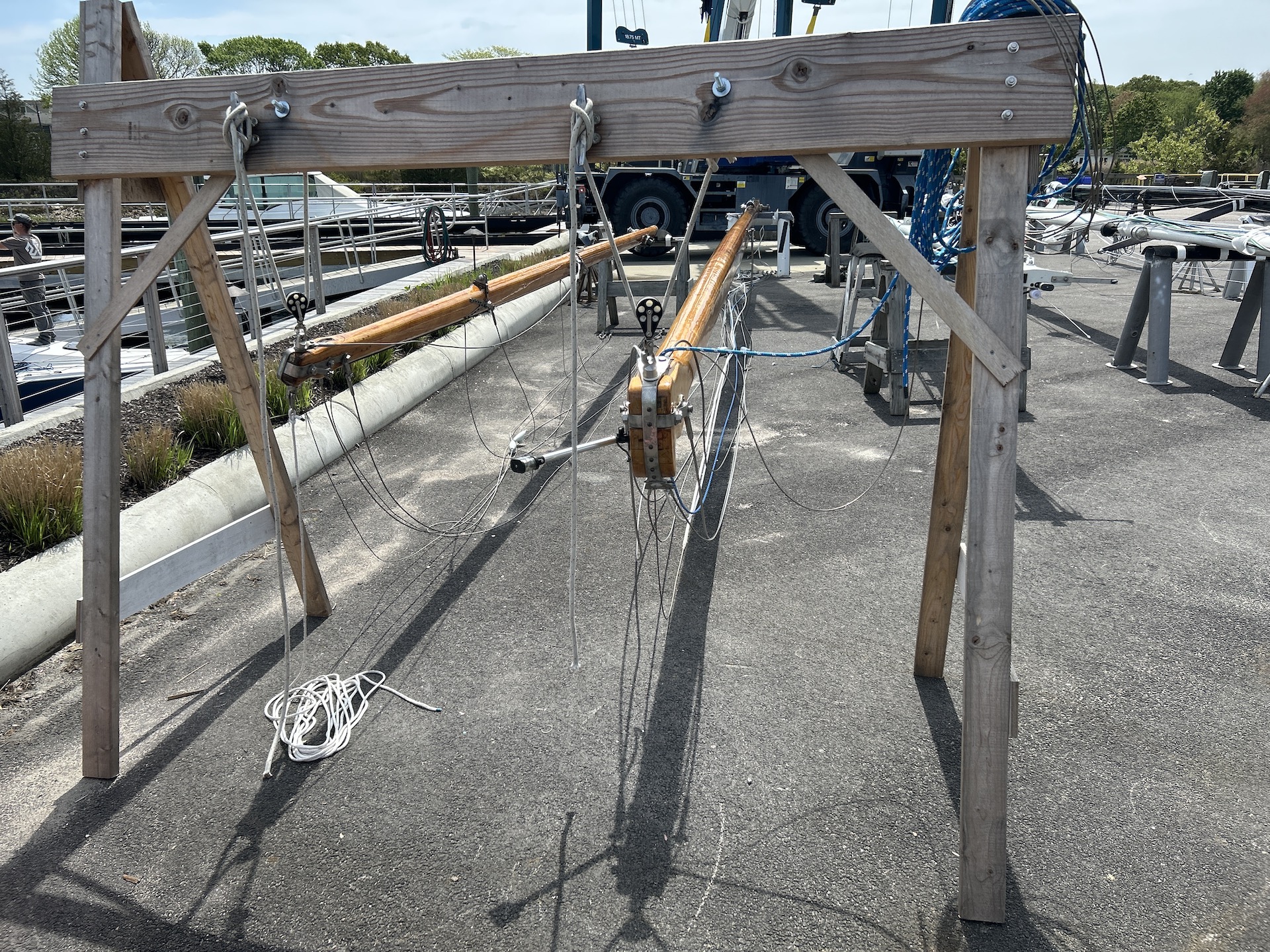
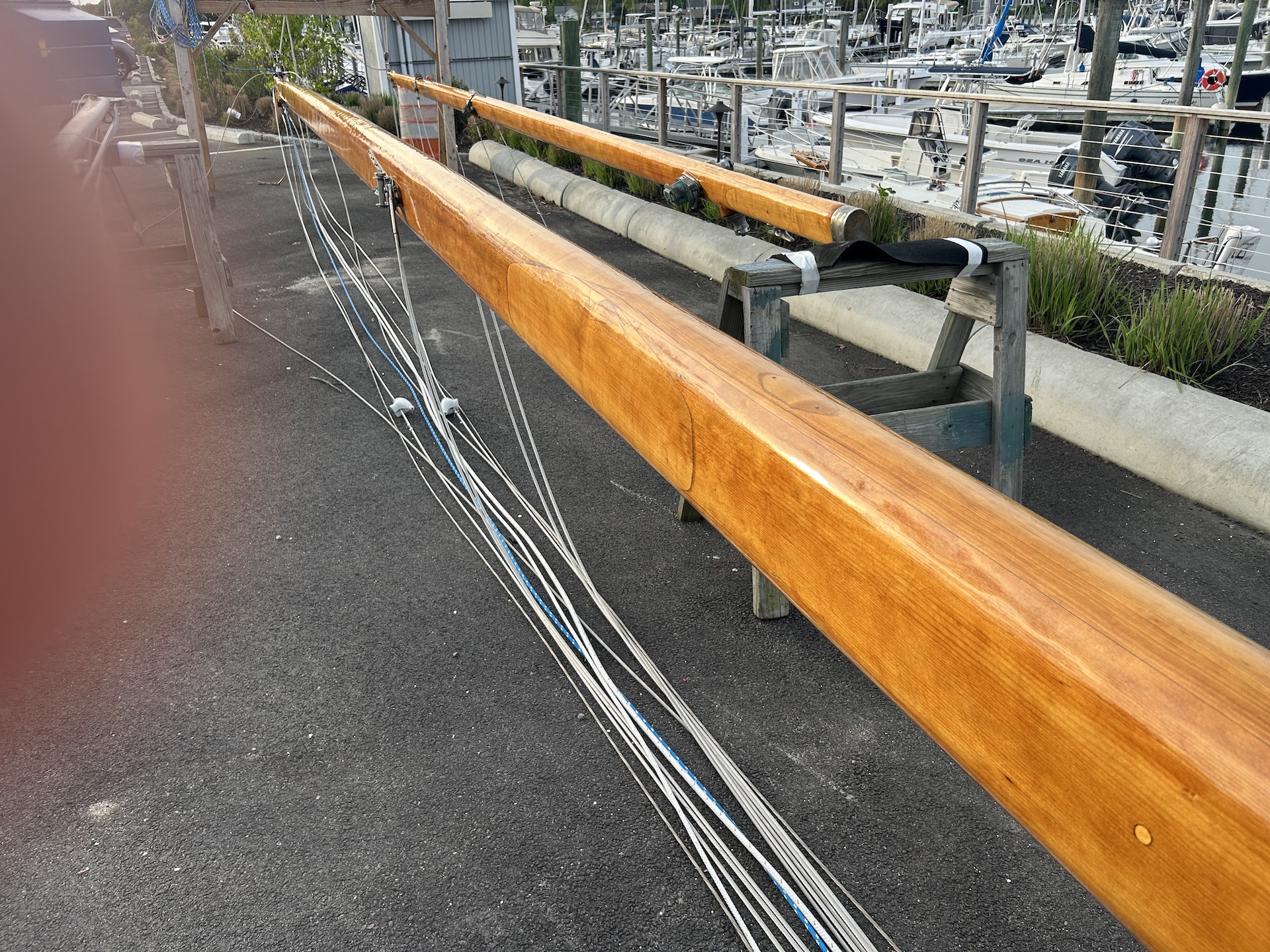
Spreaders are on the masts, rigging sorted out, and ready for stepping:
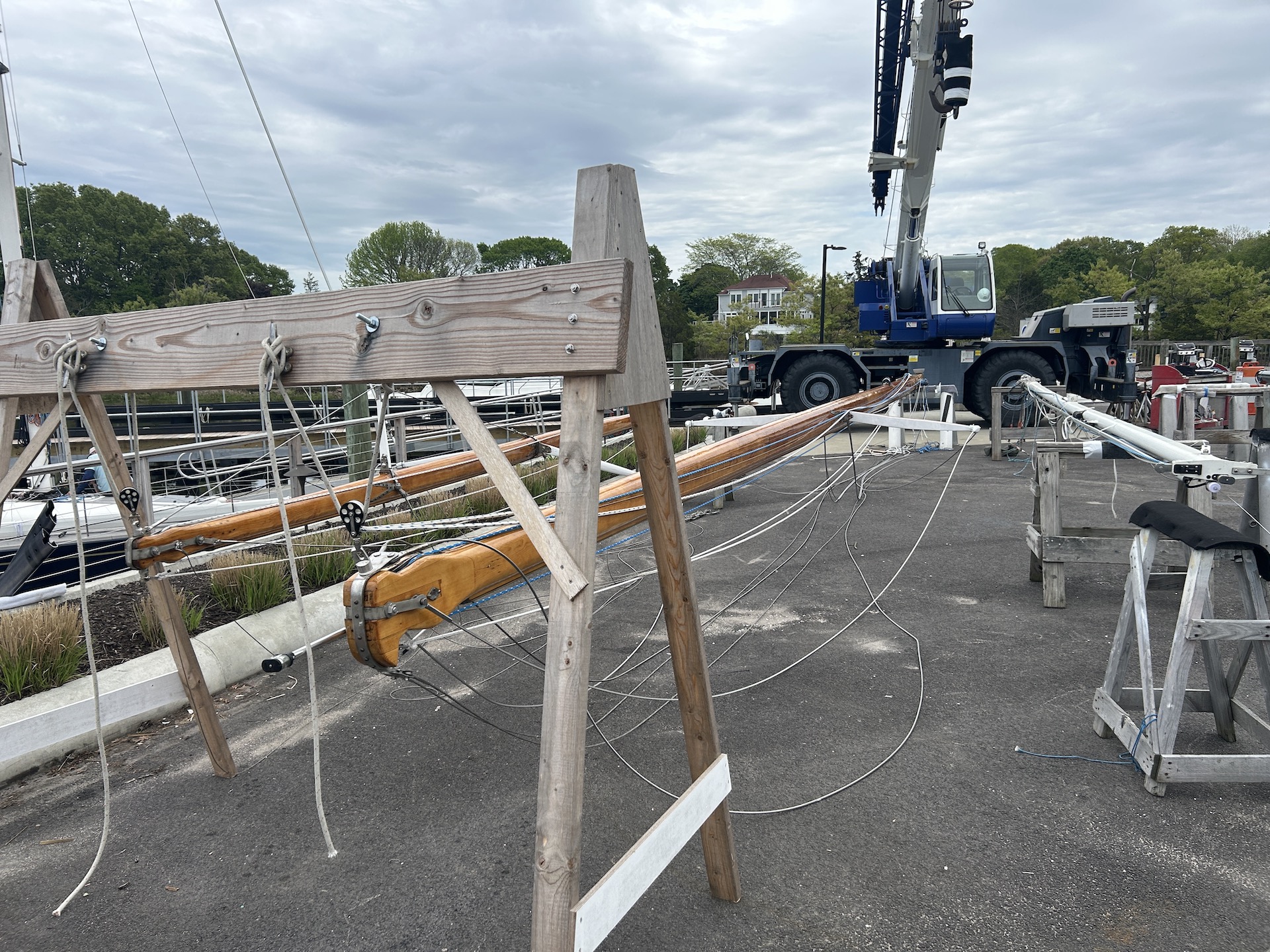
Unfortunately there was a self-induced mishap before stepping the masts. The top of the main mast was supported (as you see above) by a block and cleat, and the bottom of the mast by a sawhorse. Minutes before the masts were to be stepped, I lowered the top of the main mast a few feet (for no good reason, in retrospect). What I did not notice, however, is that by that time the marina crew had put supports under the ends of the spreaders (not shown above) as a means to keep the mast from rotating. (I’m not sure this was a necessary step, but it certainly not wrong for them to do so.) Thus, the ends of the spreaders could not go down as I lowered the top of the mast and the following was the result (that is the port-side spreader…the starboard-side spreader was somehow spared damage):
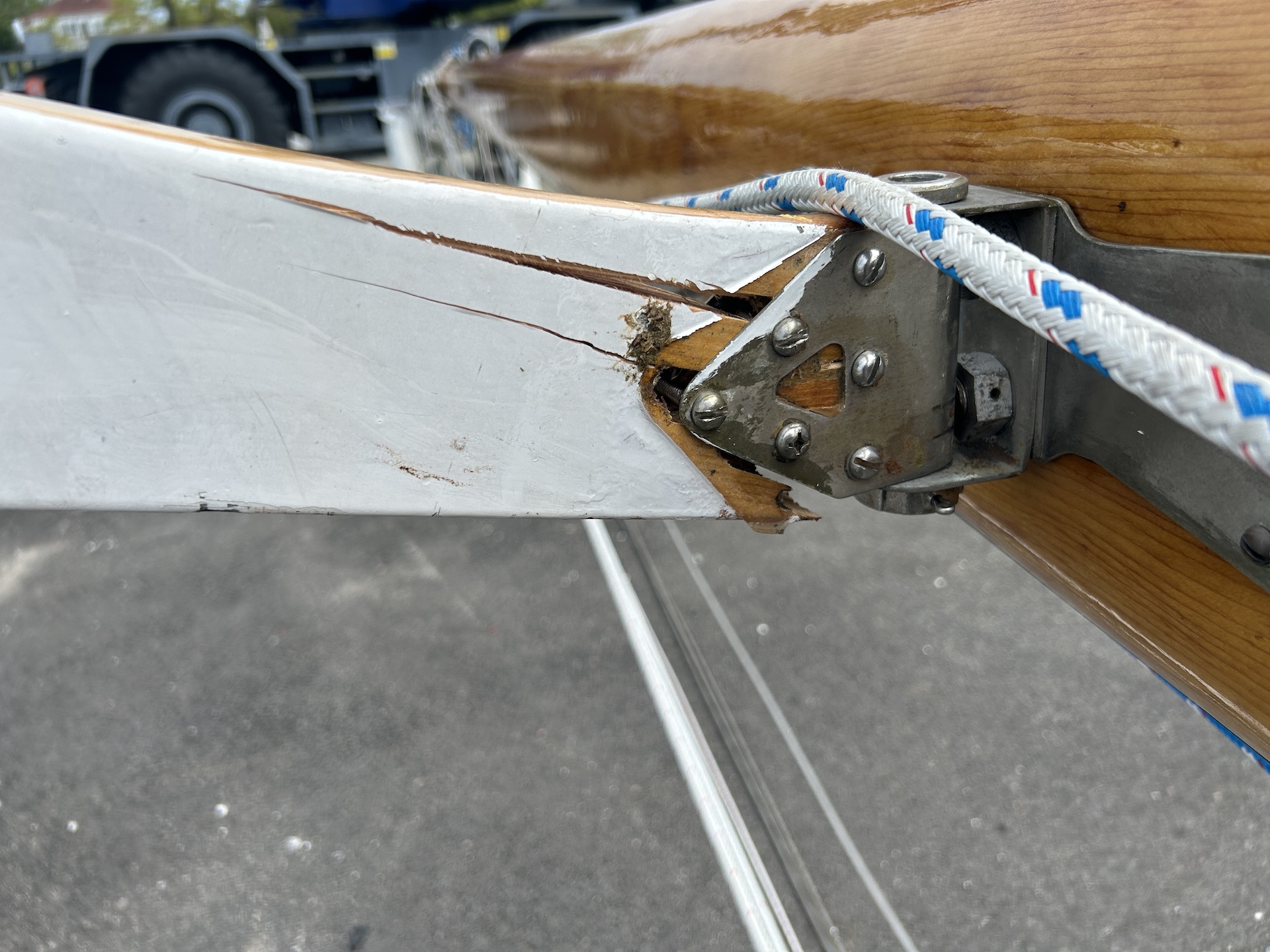
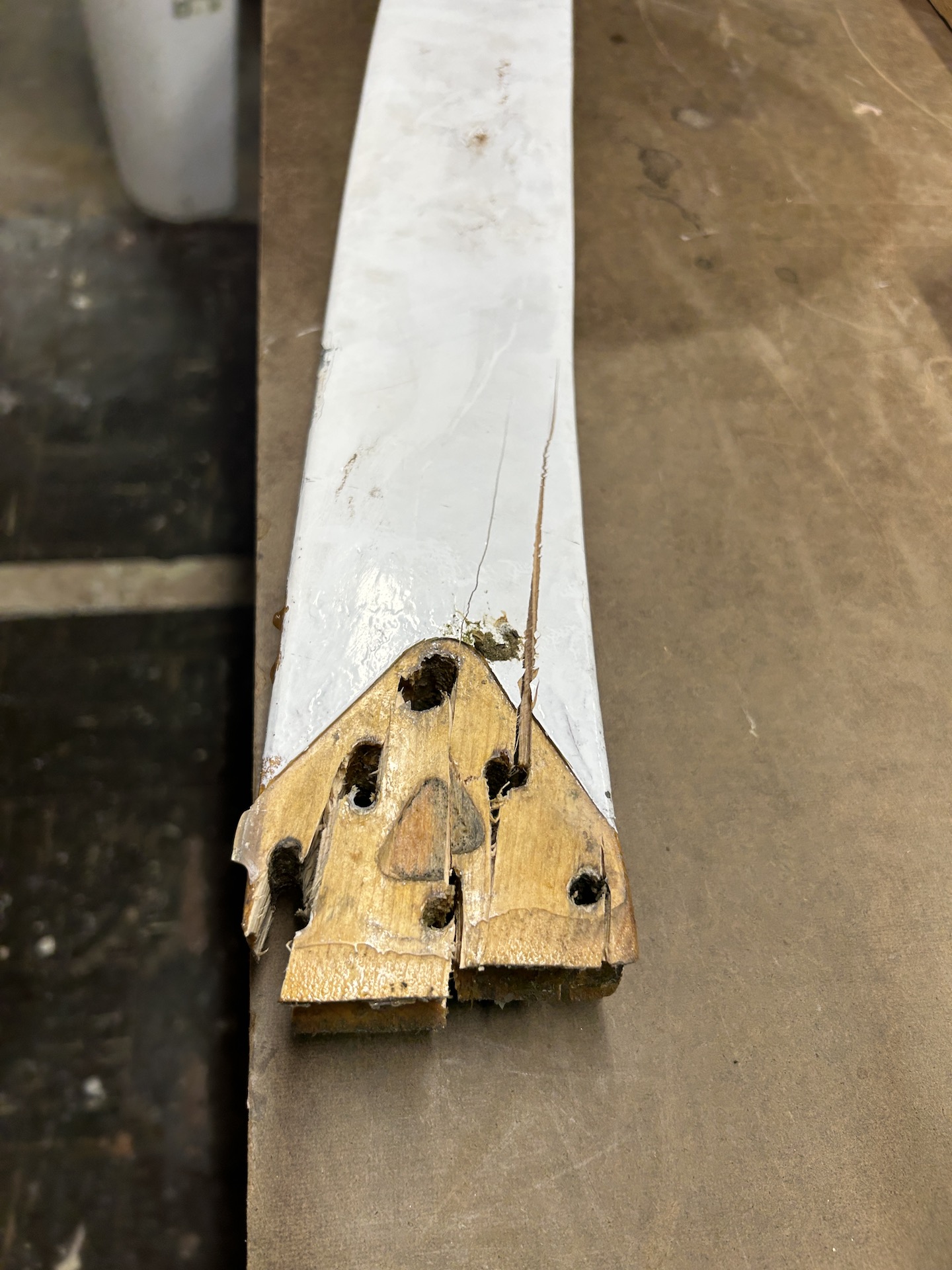
After apologizing to the marina crew (all this was totally my fault), I told them I would be back in the morning with a new spreader. My plan was to scarf in a piece of sitka spruce, shape and reassemble. When I got home I realized that I didn’t have enough spruce, so I built two new spreaders out of teak. Here are some photos of the process and result:
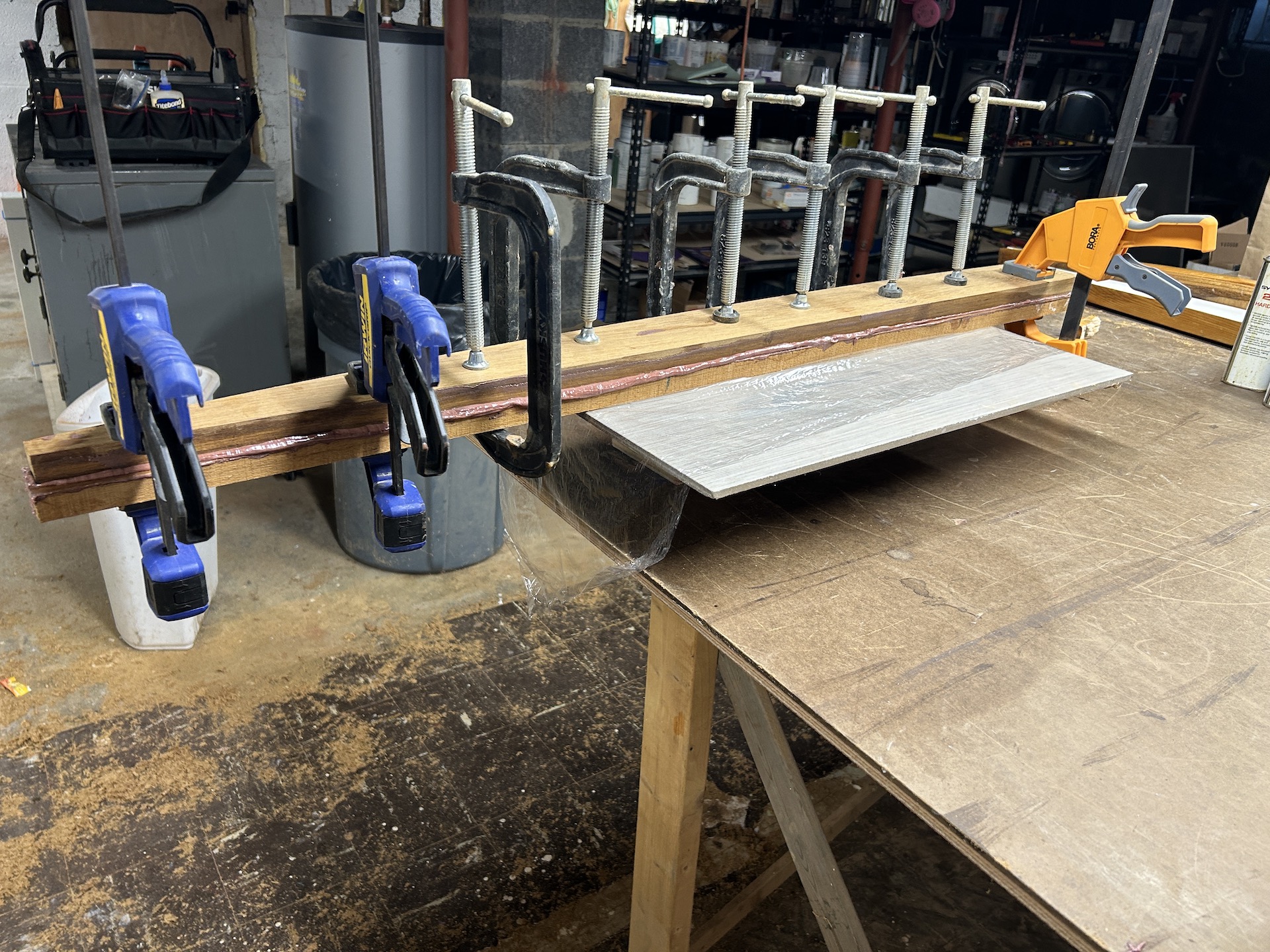
I had to laminate two pieces for each spreader to get the required thickness:
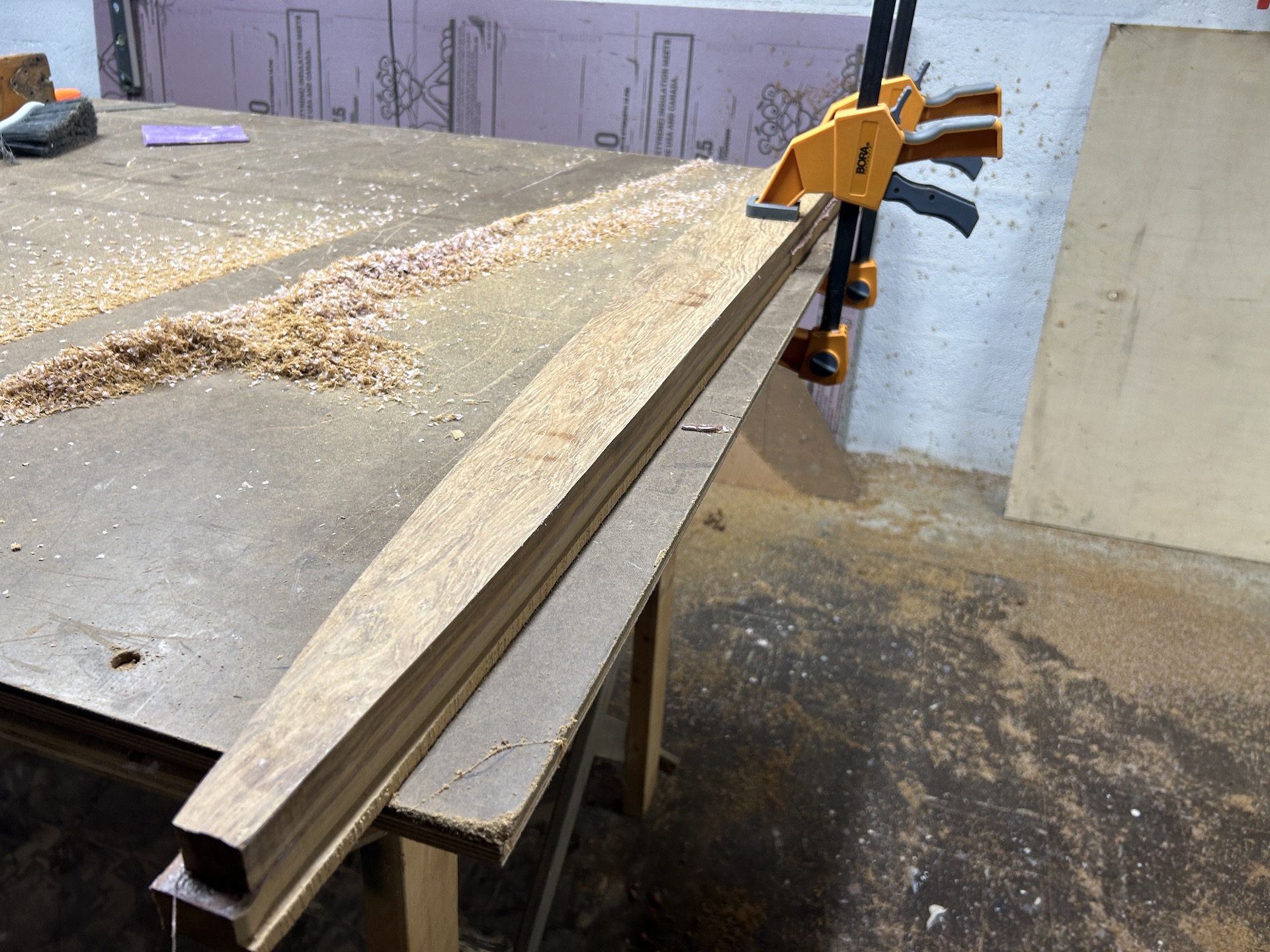
I was in a stressed-out hurry and I didn’t take enough pictures. Basically I shaped the four pieces roughly and laminated in the evening, then shaped the spreaders and transferred the hardware in morning, after the epoxy had dried overnight. About 16 hours after the accident I had the new spreaders installed and ready to go:
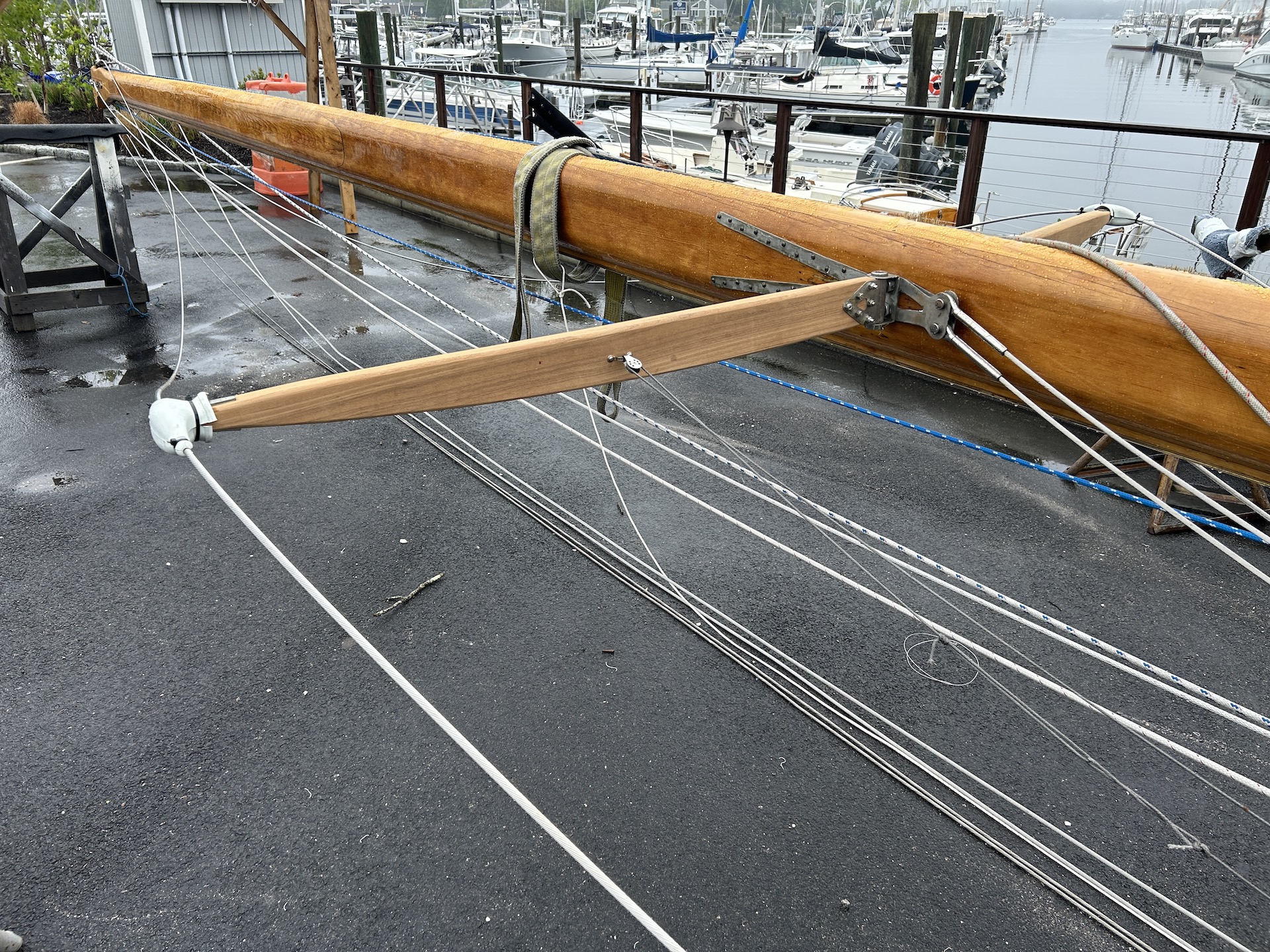
The silver lining of not having the spruce is that I would have had no time to finish (varnish/paint) the new spreaders, and teak requires no finish at all.
There were a number of projects I completed after launch. I made the filler board to support the filler cushion, allowing me to make a full-width bunk in the forward cabin:
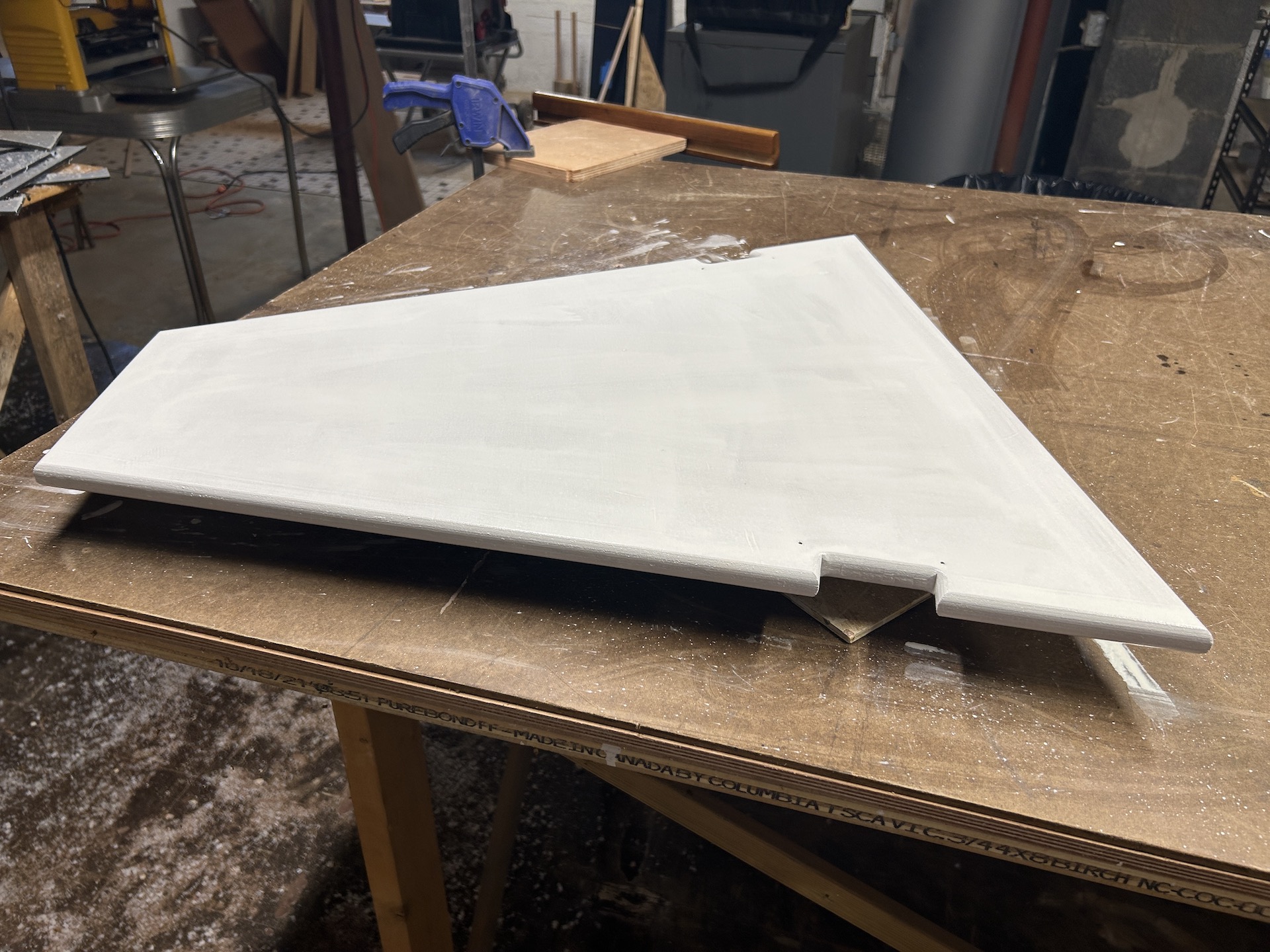
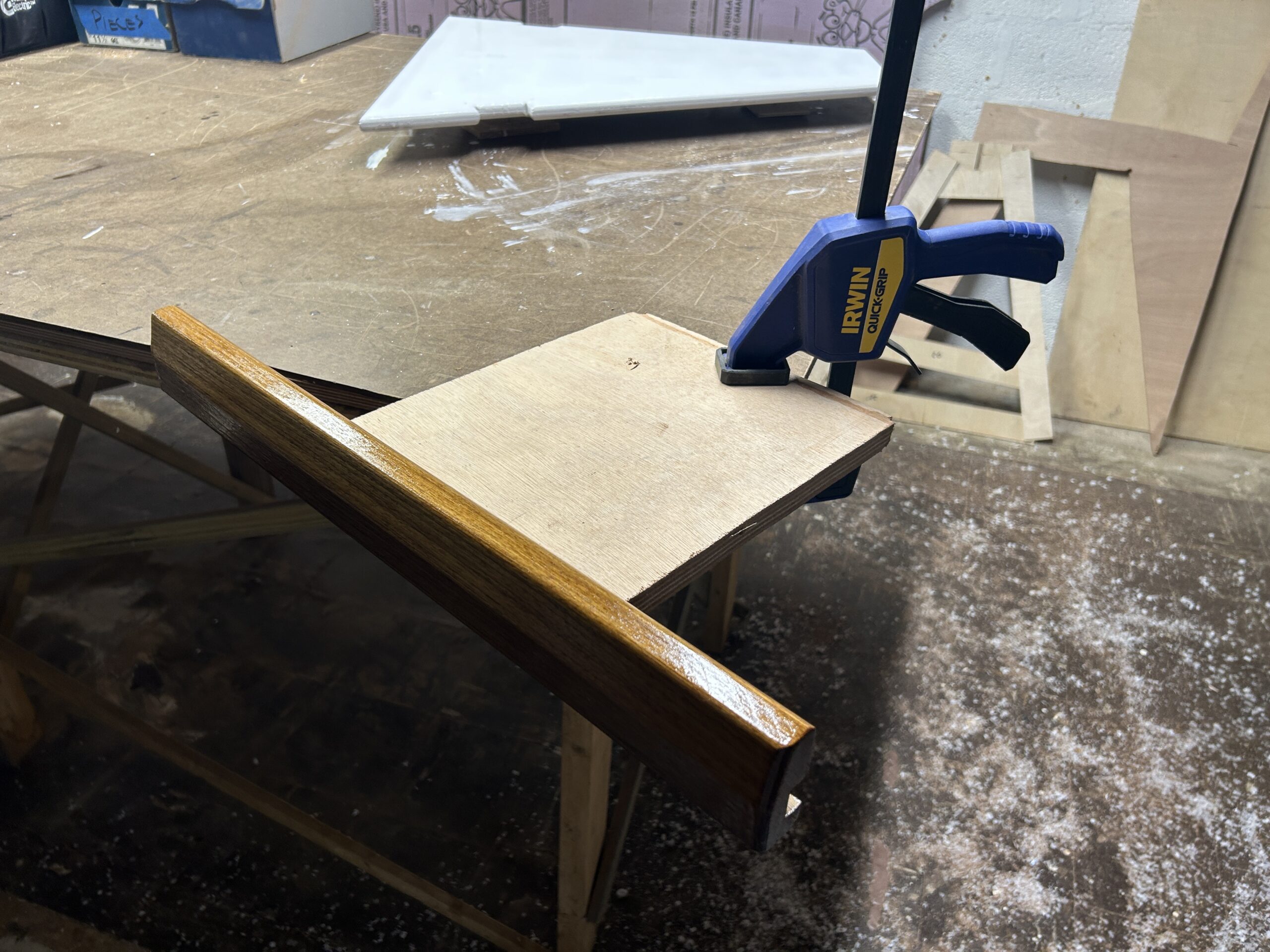
The board notches into two small pieces of wood that keep the whole thing from moving.
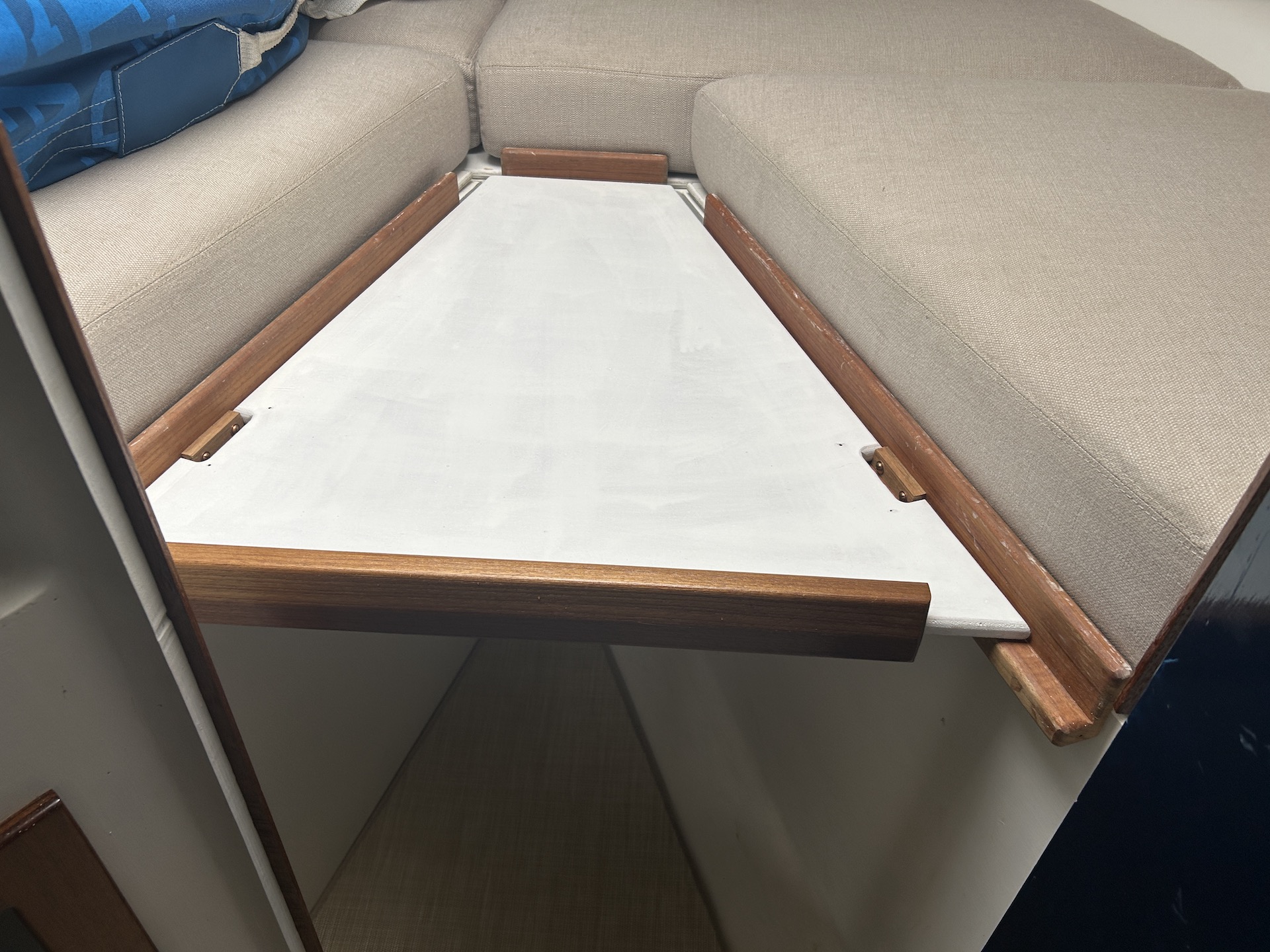
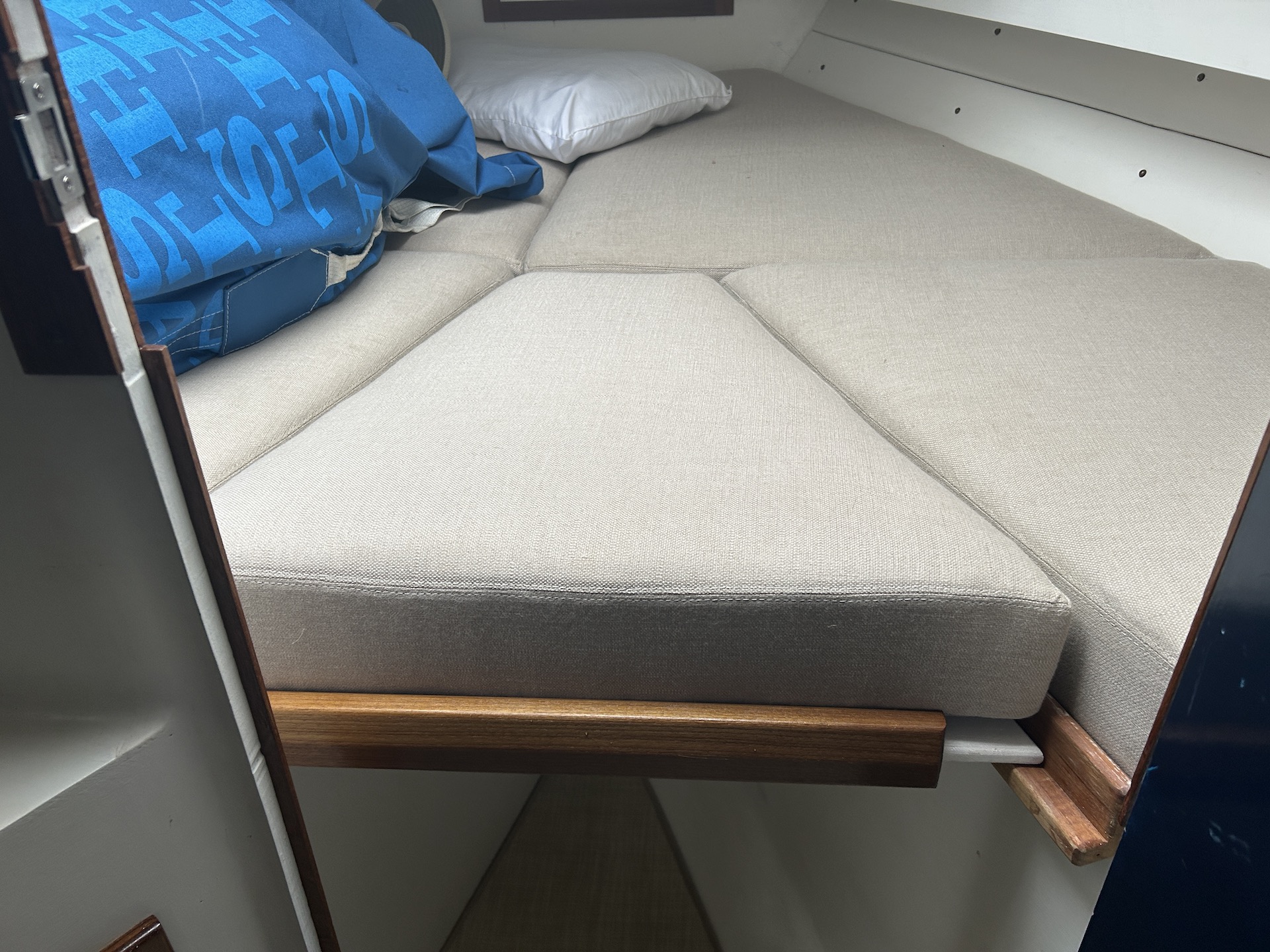
This was a very welcome addition for two reasons: (1) The starboard-side bunk in the forward cabin is too narrow for one person to sleep comfortably (i.e., without their left arm falling into the abyss while they try to sleep). Even a solo sleeper on the port-side bunk will appreciate the extra width. (2) Making the bunk full width creates a space in the boat in which heeling cannot possibly throw things onto the floor. Generally I keep the board and cushion in a hanging locker, but it’s nice to have the option to make the full berth.
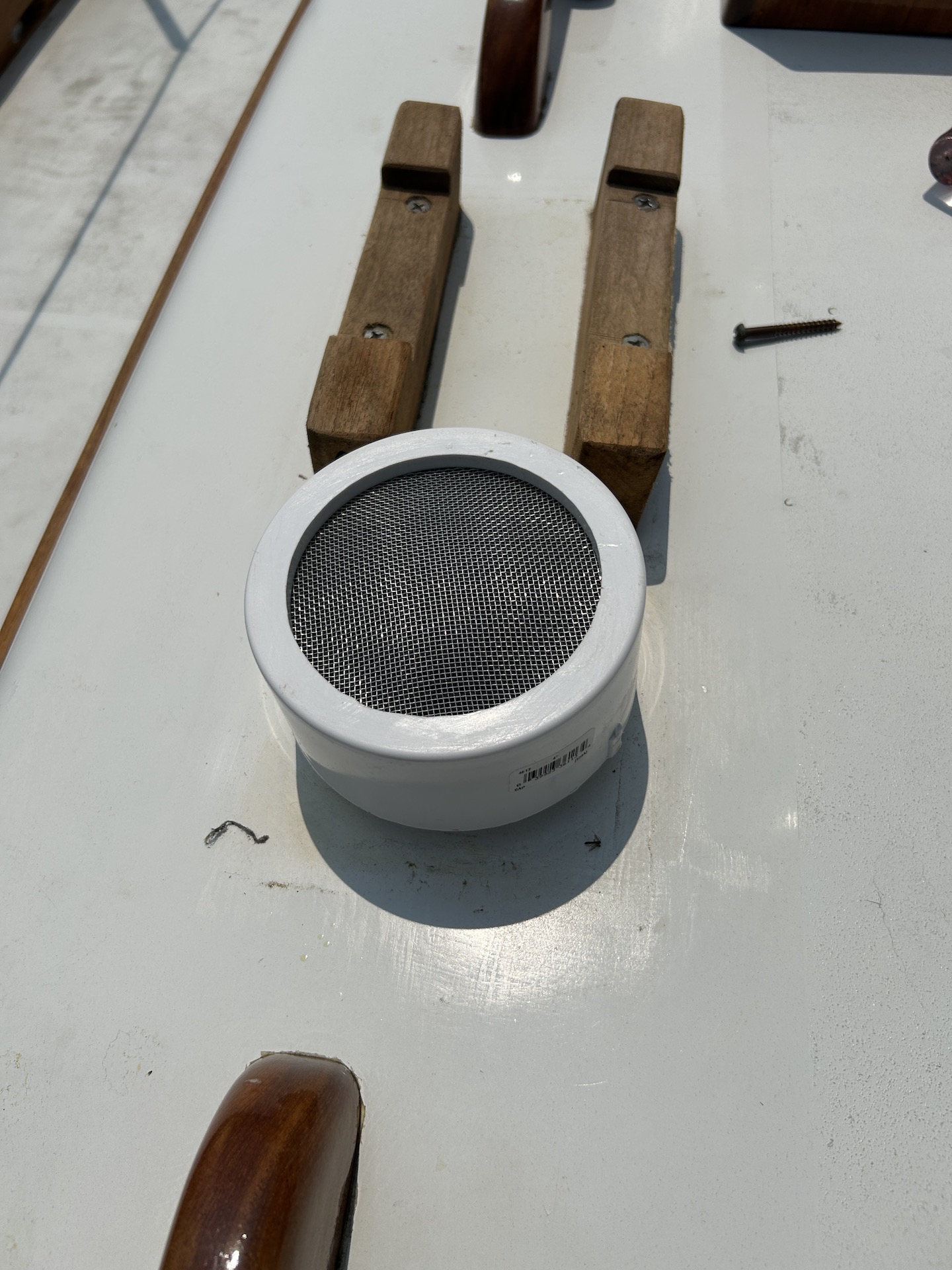
Other things I did this summer: Installed screens at the top of the dorade pipes:
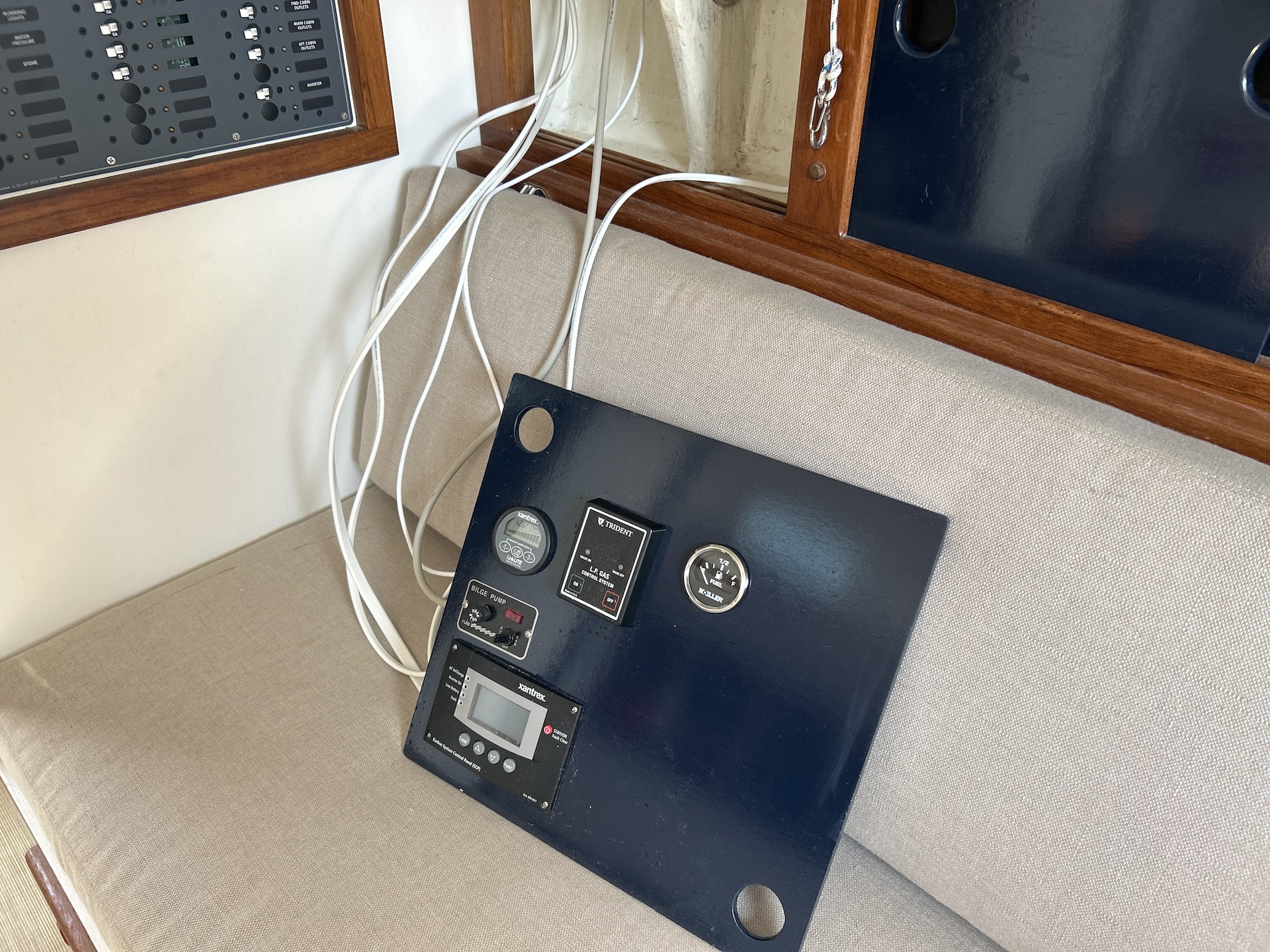
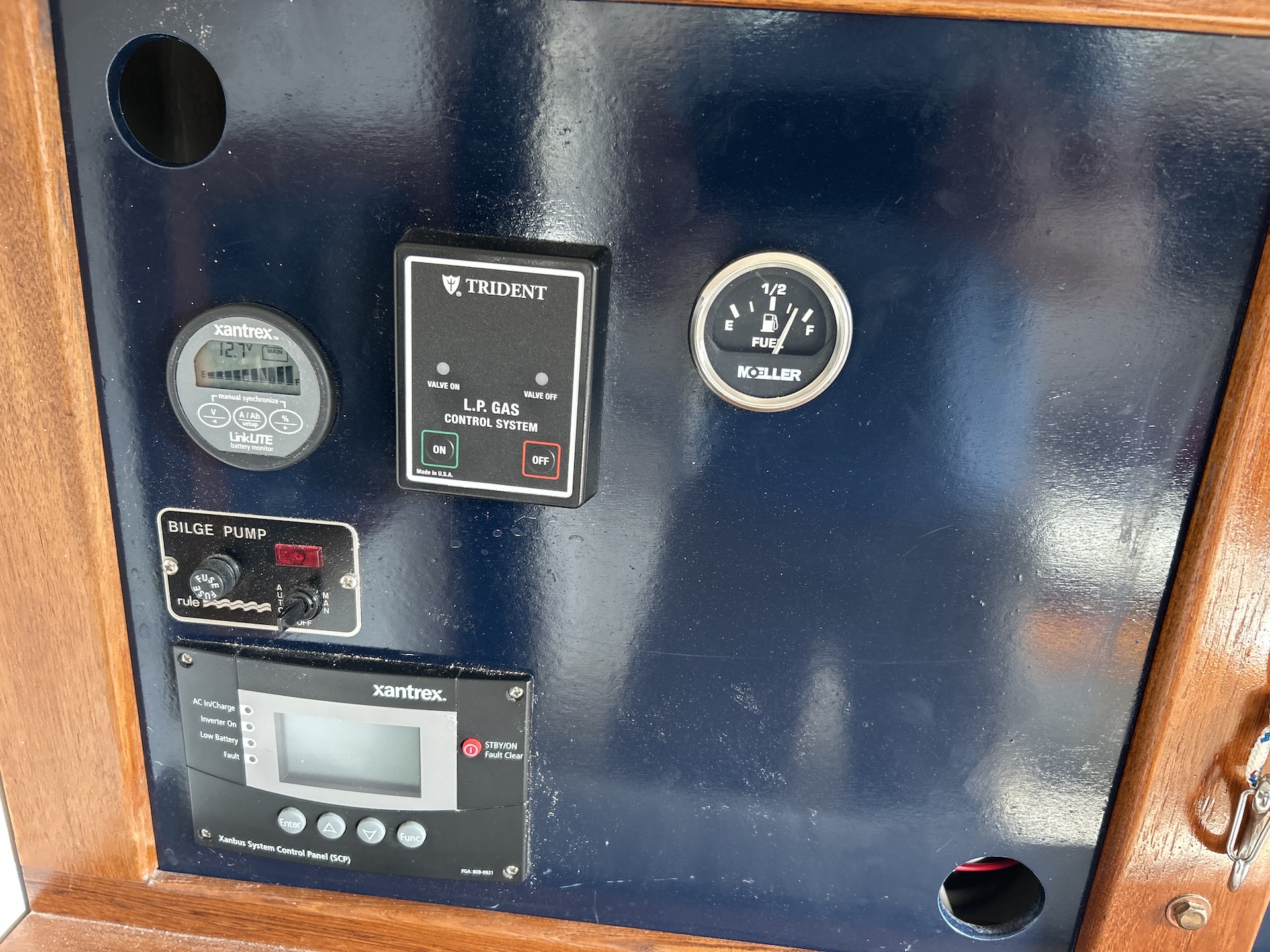
Installed and wired a fuel gauge:
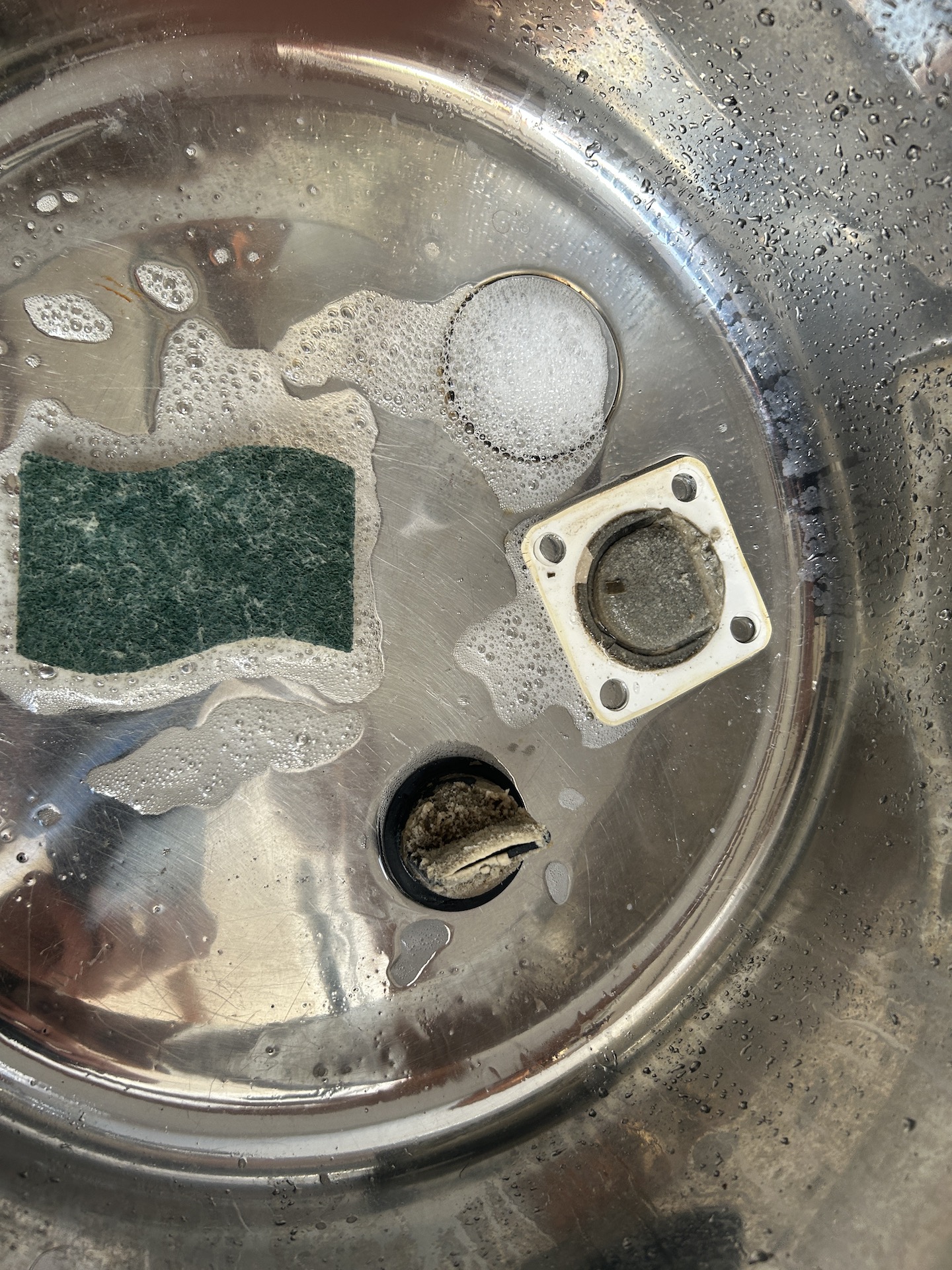
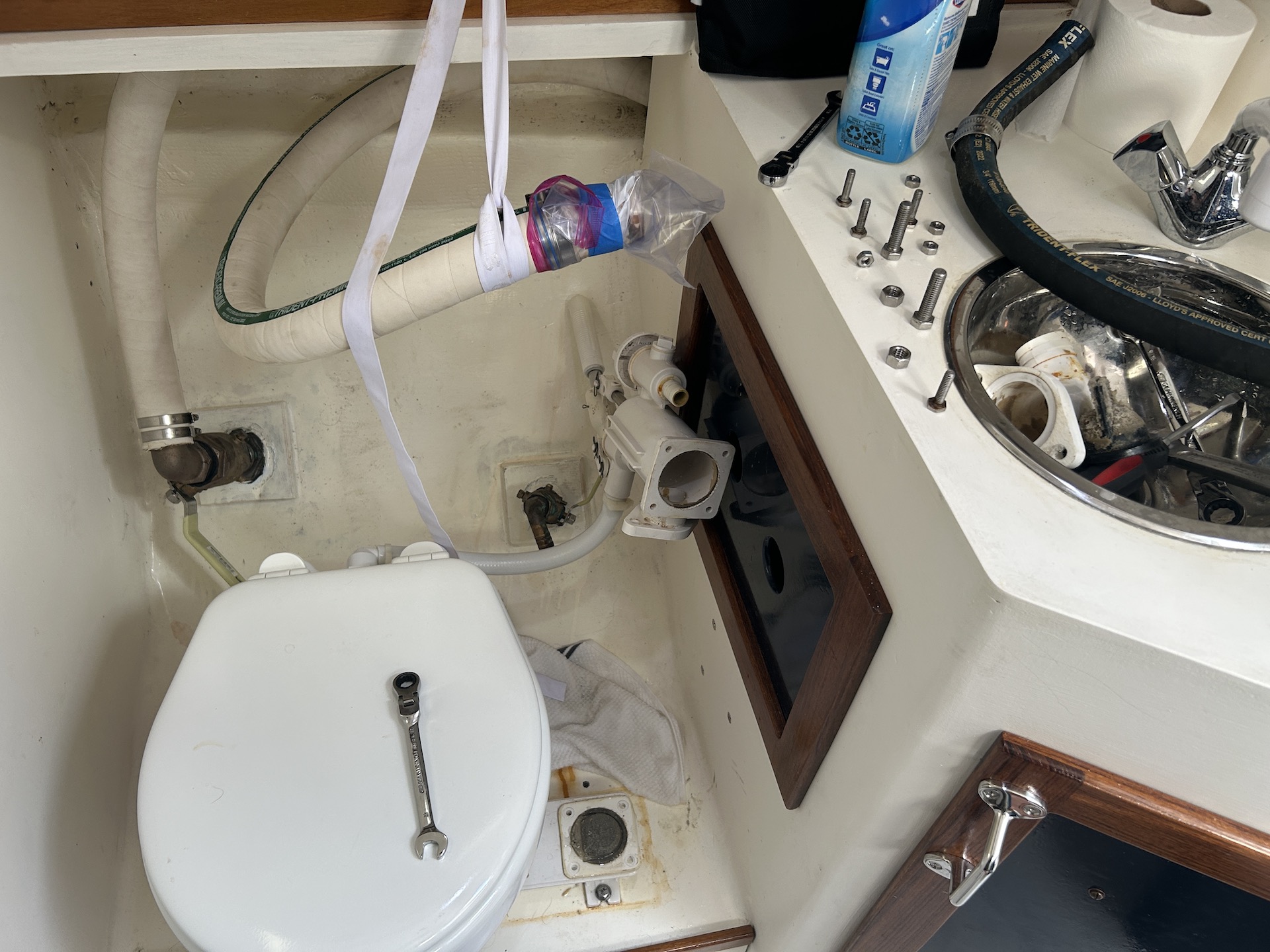
I replaced the joker valve and the flapper valve in the head (odors were happening, but this took care of it):
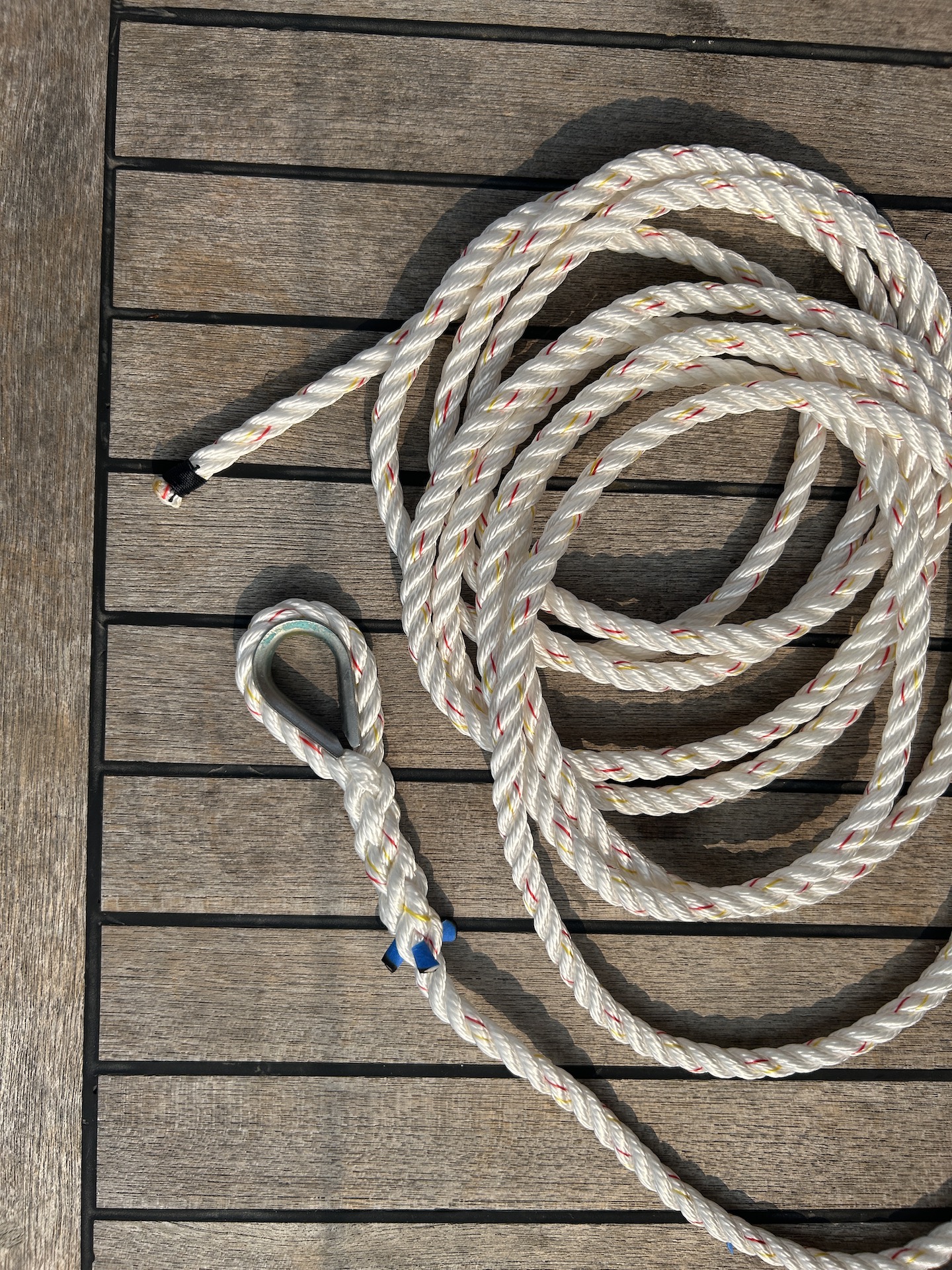
Make a new, and longer, painter for the dinghy:
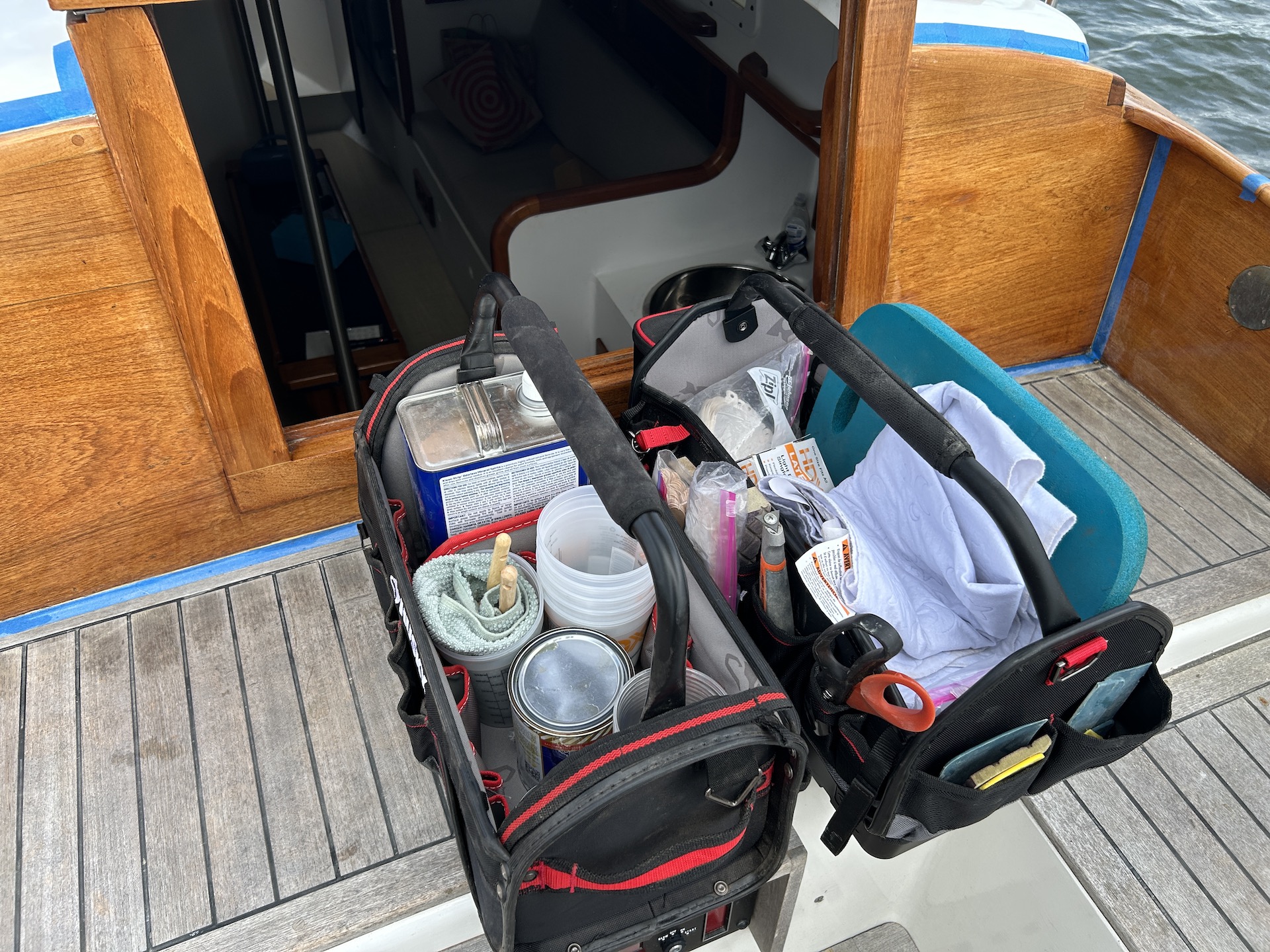
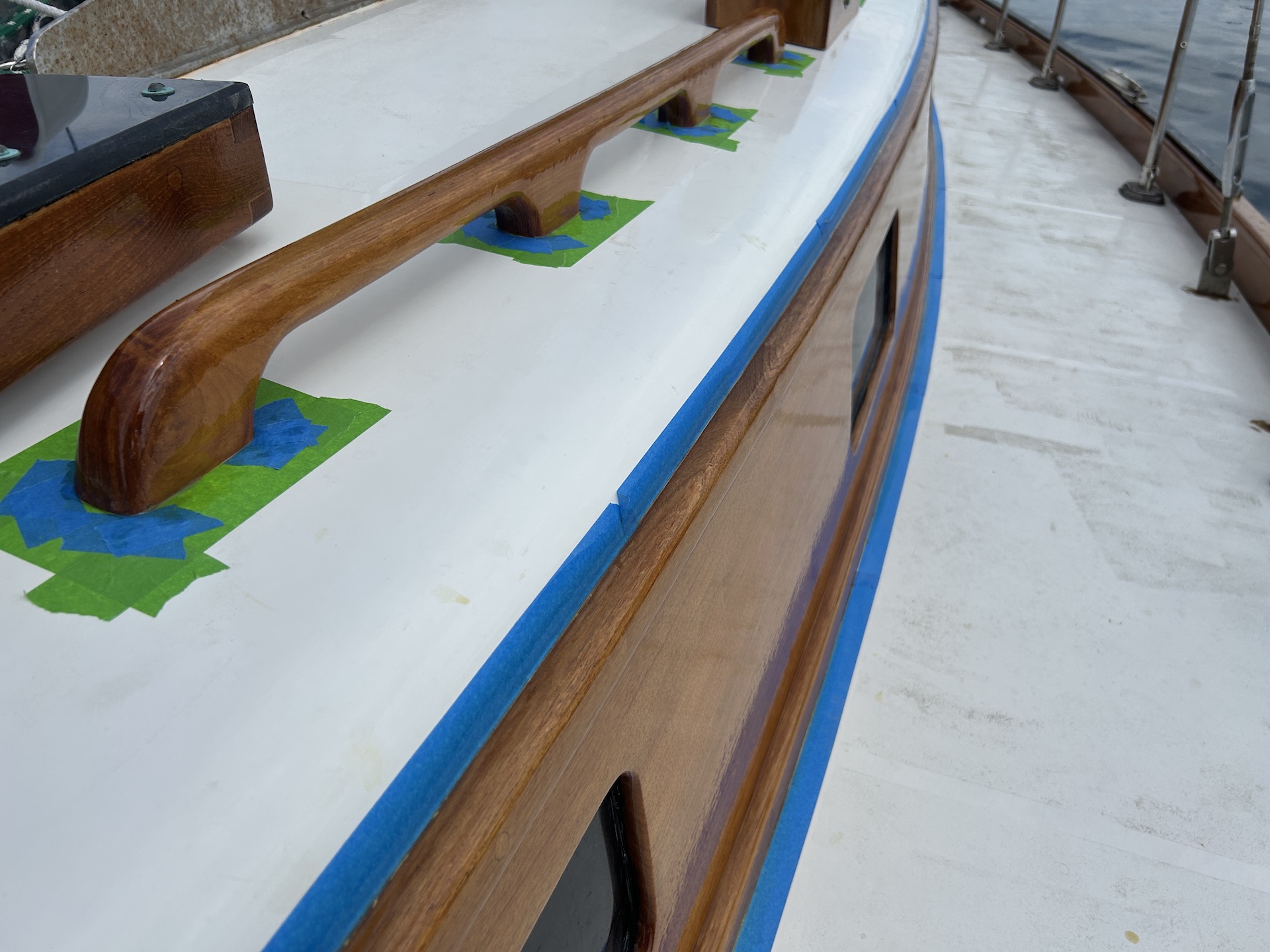
And, of course, plenty of varnishing. My varnishing kit has evolved to be complete, compact, and easily transported to and from the boat:
I installed new faucets and finally hooked up the hot water tank to the engine. Watch the video below.
The faucets have 10-foot hoses. The head faucet can be taken out the front hatch for a hot shower on the foredeck. The galley faucet can be used for cockpit showers.
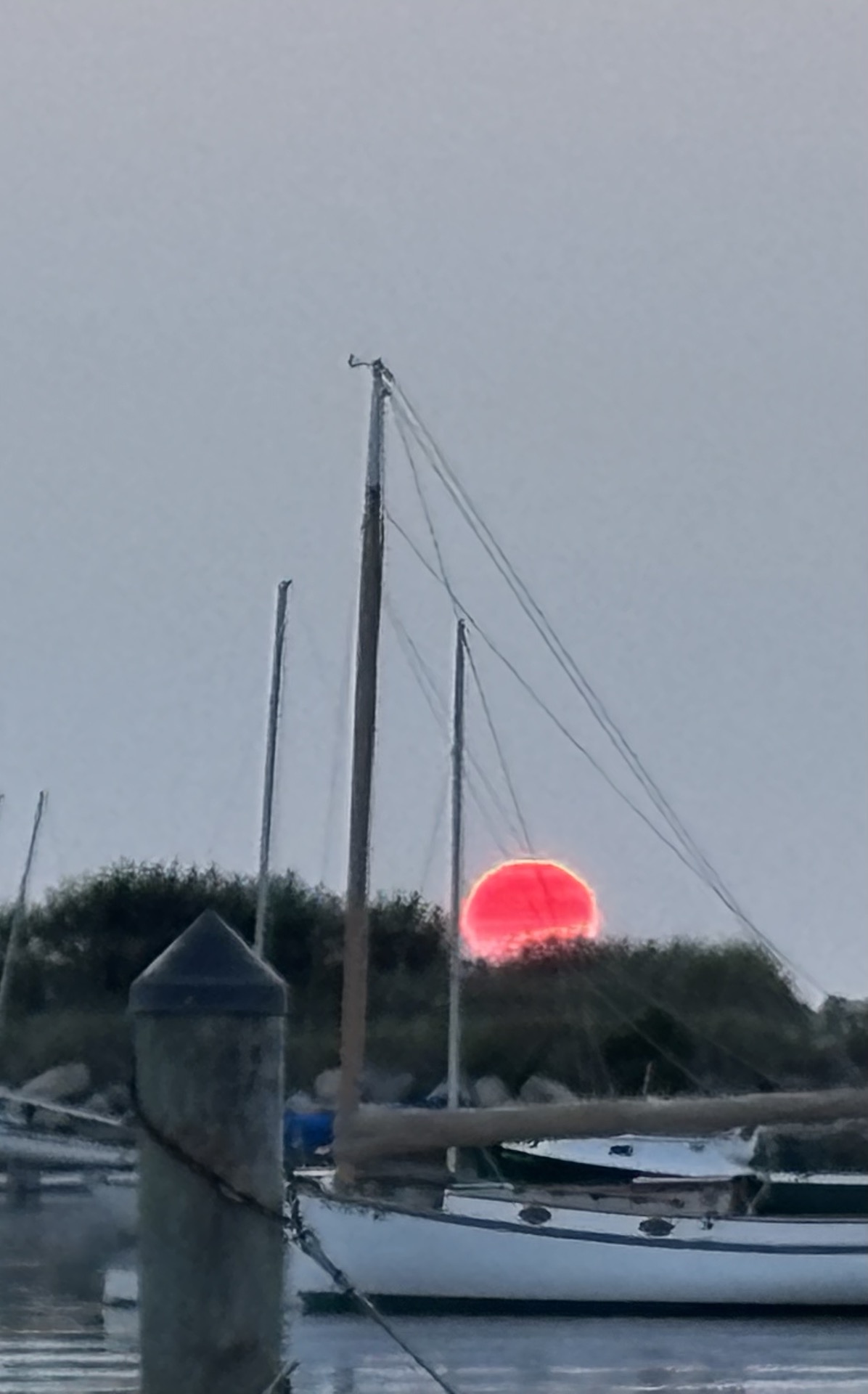
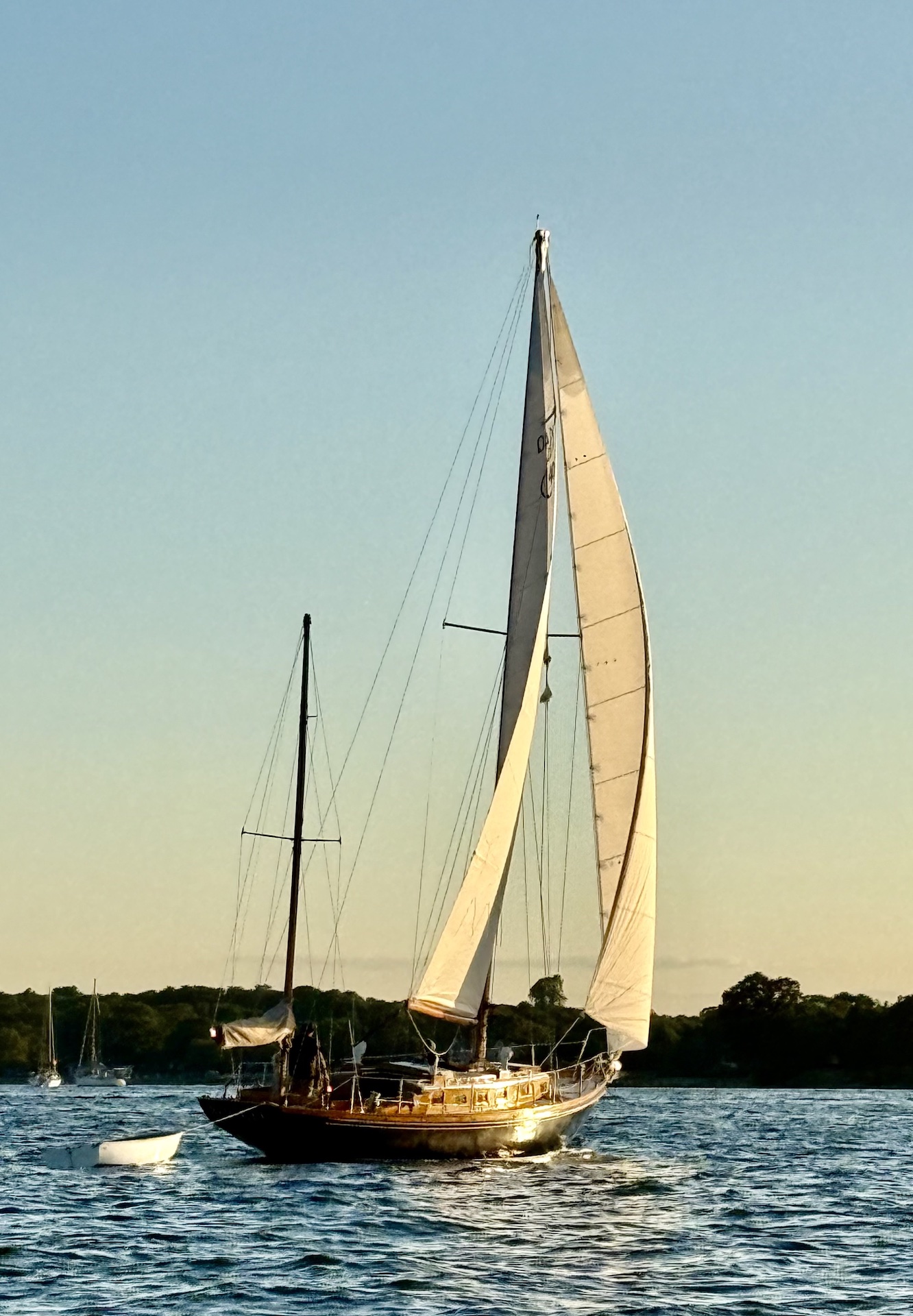
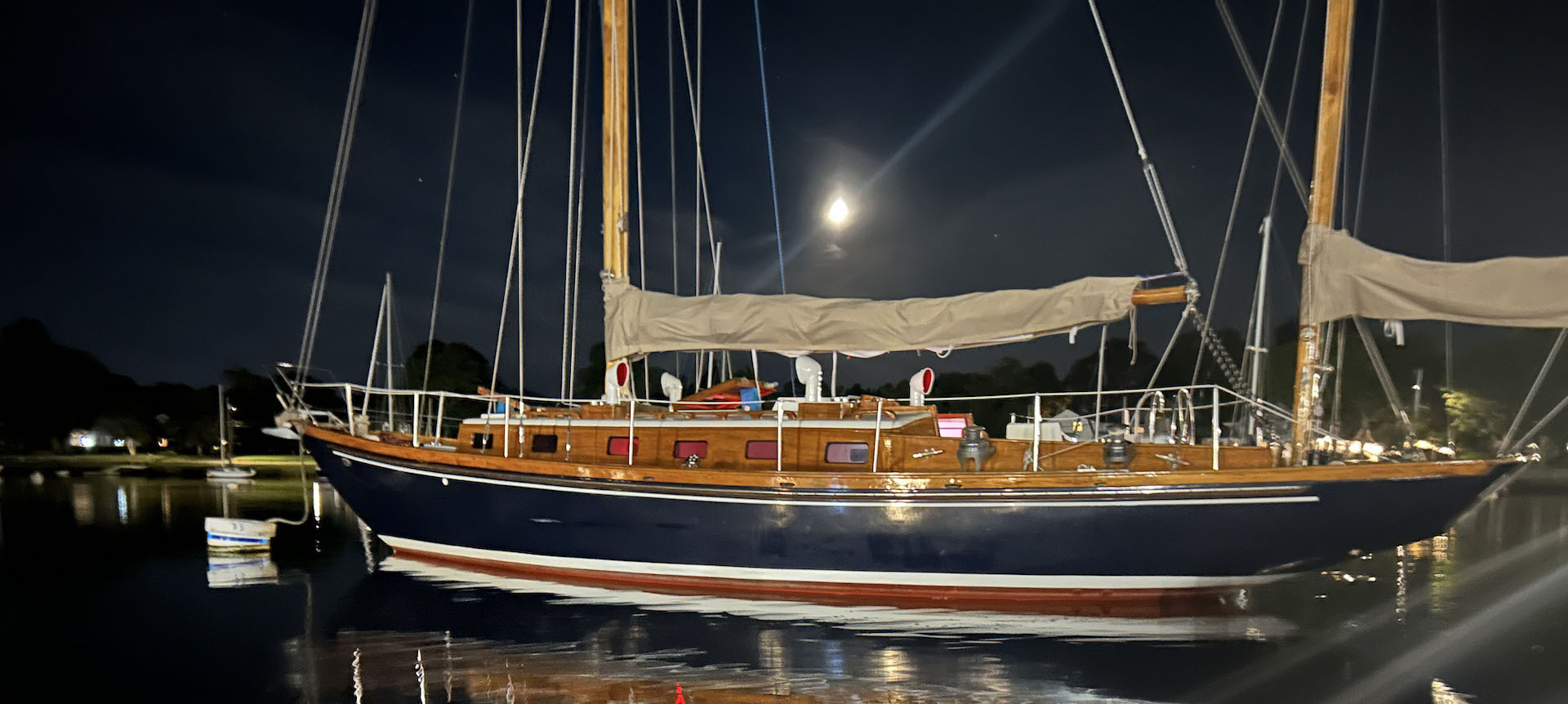
Finally, a few more pictures from the summer: